
Last updated November 16, 2026
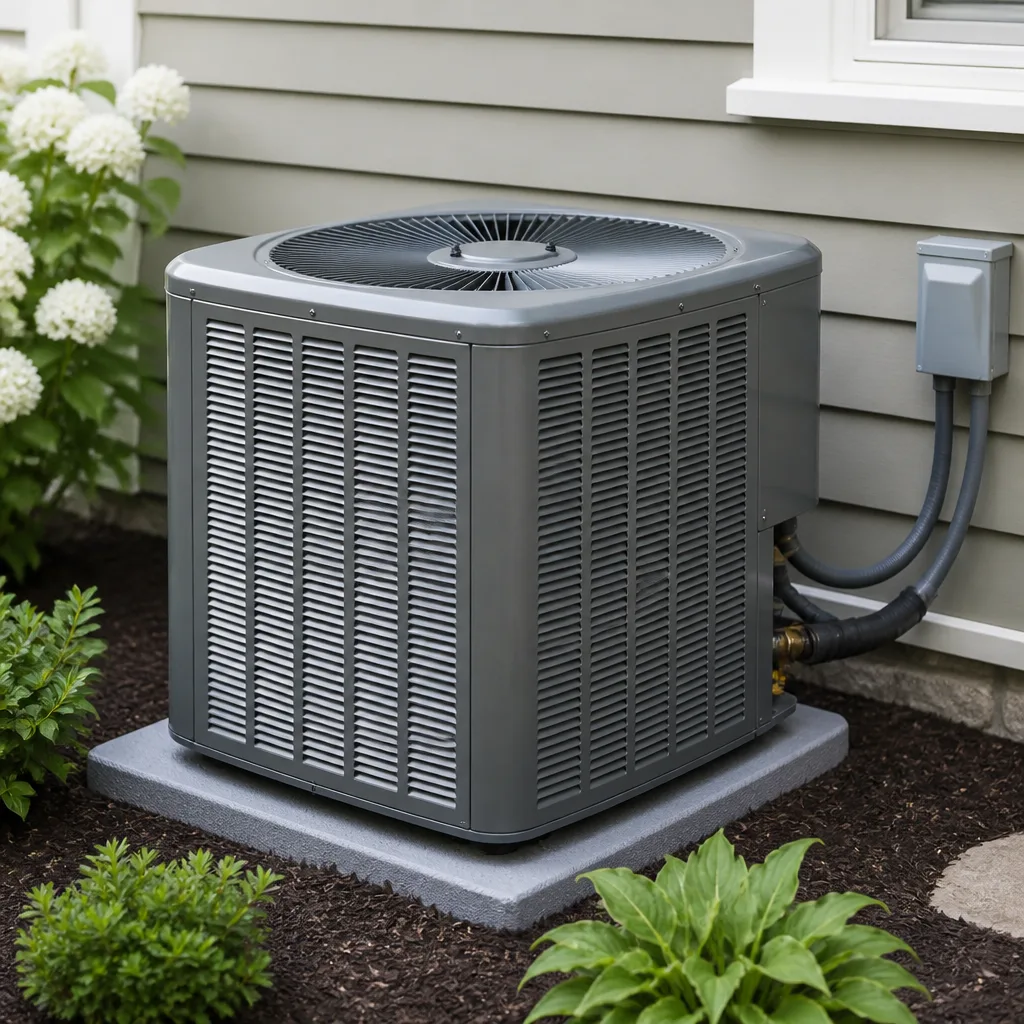 AC repair
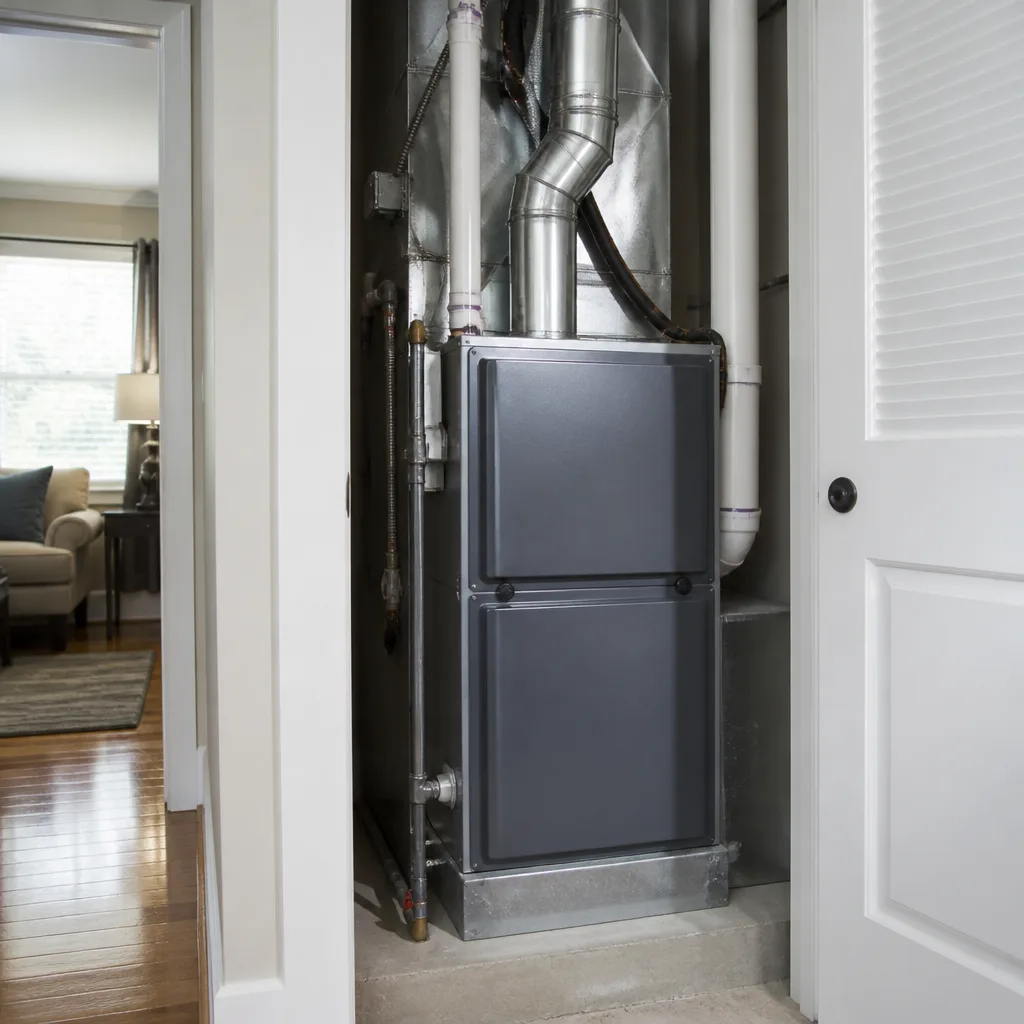 Furnace & heating
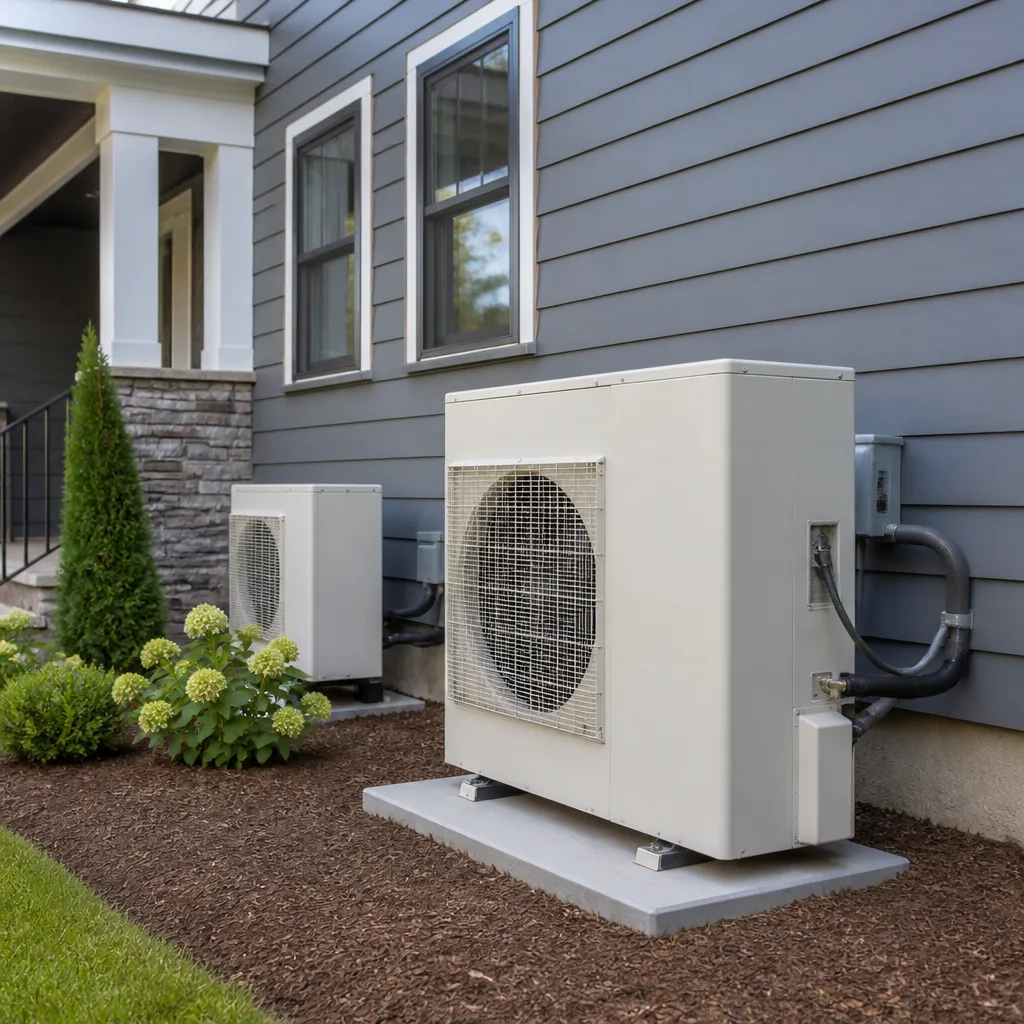 Heat pumps
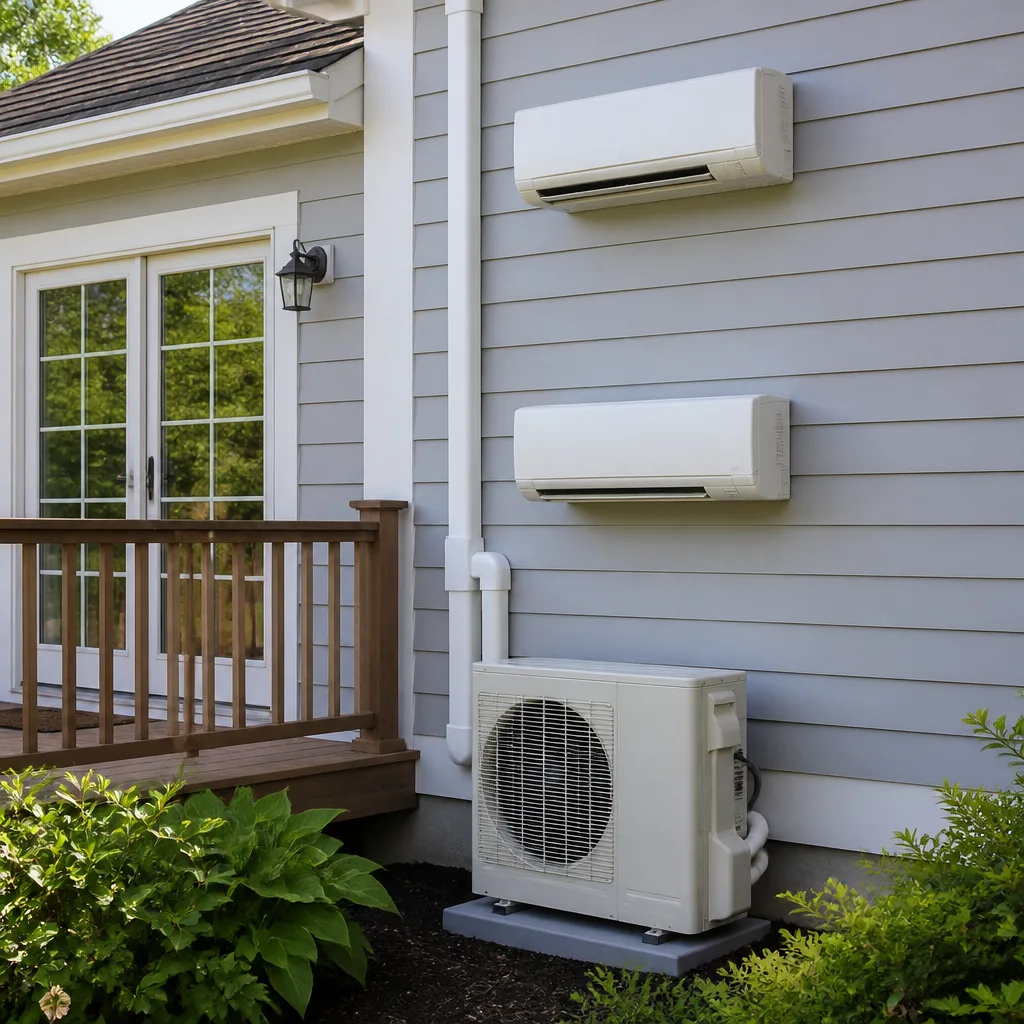 Ductless mini splits
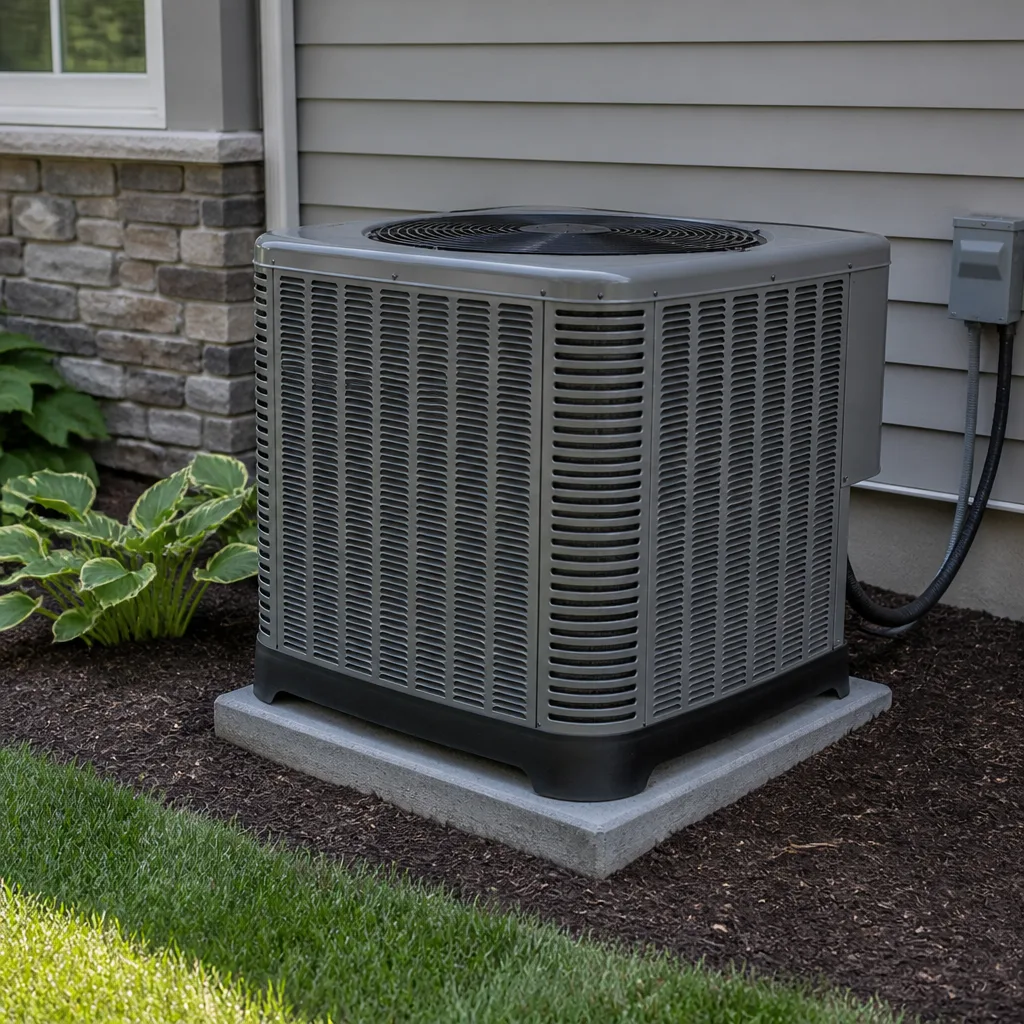 Carrier
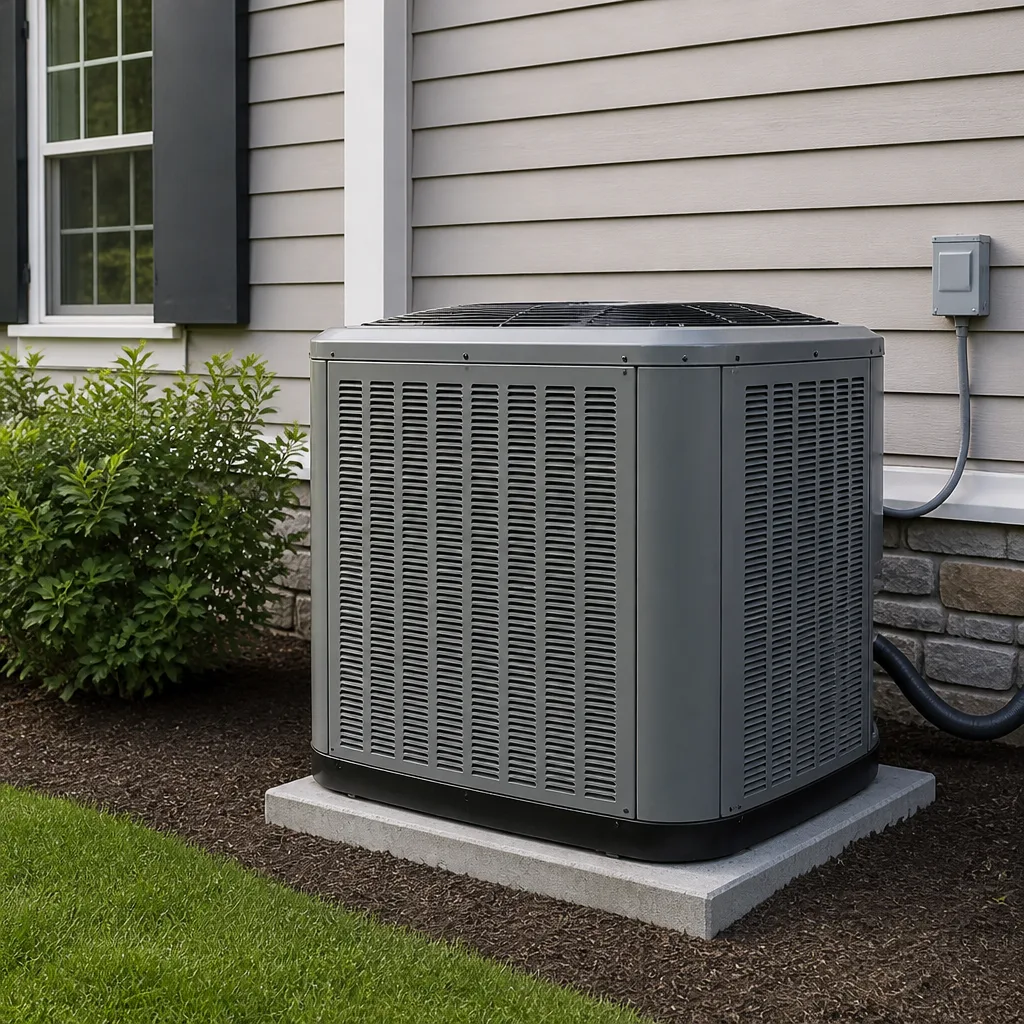 Trane
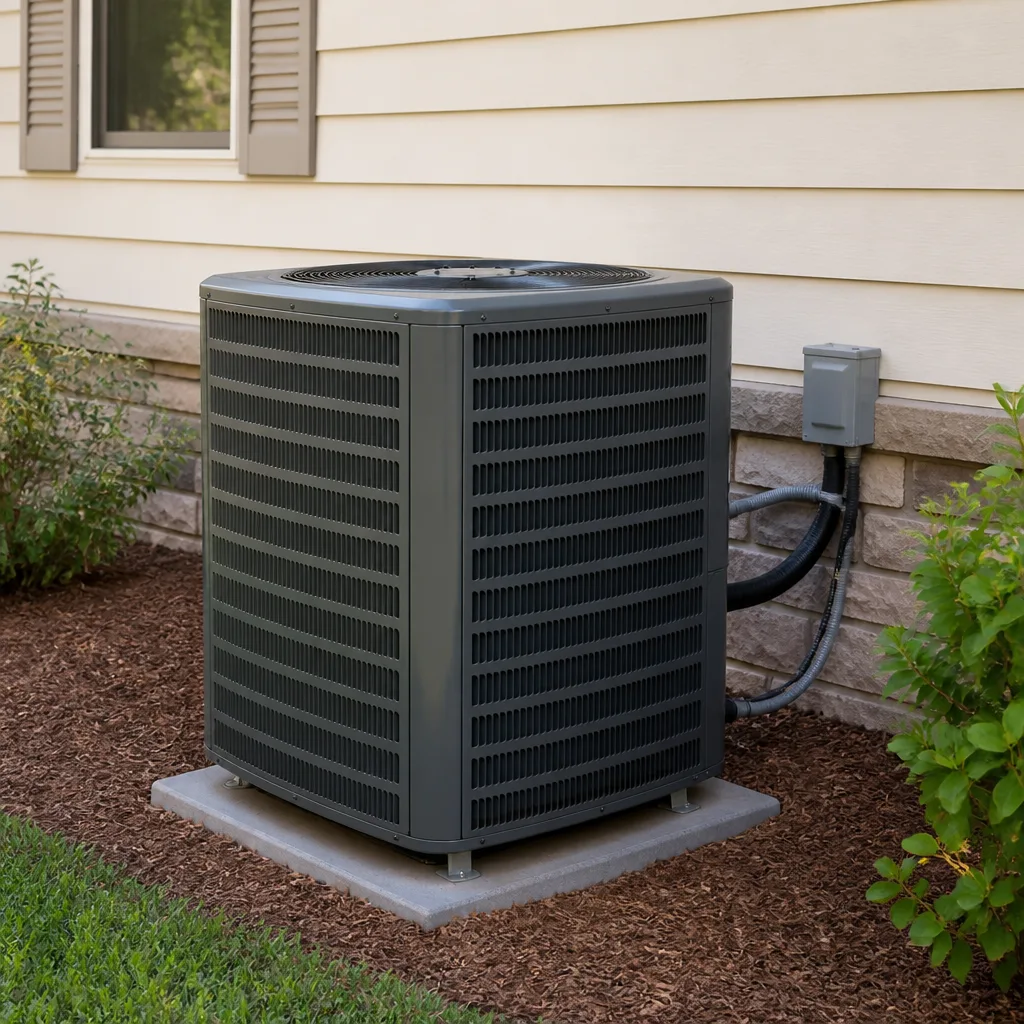 Goodman
Seasonal tune-up and full diagnostic on your Carrier, Trane, or Goodman system - readings shown to you before any repair is proposed
Diagnosis first, numbers second - you approve the repair price before a single part goes in.
Get your free estimateHVAC Cost Breakdown: The Paradise Homeowner’s Reference for 2026
Most HVAC cost guides quote a national average for a central AC replacement of about $5,500 and tell you to plan around that figure. In Paradise, that number doesn’t hold. Add Clark County permit fees, the efficiency tier Nevada has effectively required since its post-2023 code update, and labor pricing that reflects a market where summer installs are booked out, and a standard residential install usually starts closer to $7,200. That gap matters when you’re reading three quotes that all look different. This guide breaks down what each line item actually costs in Paradise in 2026, how the NV Energy incentives work, and how to separate a fair quote from an inflated one.
Quick Answer
A standard central AC replacement in Paradise in 2026 typically runs $7,200 to $11,500 installed, with permits, refrigerant, and disposal included. A mid-tier two-stage system lands around $9,500 to $13,500, a variable-speed system runs $12,000 to $18,000, and a heat pump replacement generally falls between $10,500 and $16,000 before NV Energy incentives. The written estimate you receive sets the final price, and the range you see on a page like this is a planning tool, not a bid.
Styles & brands we work with
- AC repair
- Furnace & heating
- Heat pumps
- Ductless mini splits
- Carrier
- Trane
- Goodman
Table of Contents
- What’s Actually on an HVAC Quote in Paradise?
- Equipment Cost by System Type
- Why Labor Costs More in Paradise in Summer
- NV Energy Rebates: What’s Available and How to Claim It
- Clark County Permits and Code Requirements
- What Drives a Quote Above the Baseline
- How to Read a Quote for Margin Inflation
- Repair or Replace: The Math for Paradise Homes
What’s Actually on an HVAC Quote in Paradise?
A quoted HVAC price is not one number. It’s a stack of costs, and understanding the stack is how you spot a quote that’s compressed for a reason or inflated for no reason. In Clark County in 2026, a residential replacement quote generally has five visible line items and two that are often rolled into equipment pricing without a label.
- Equipment: condenser, air handler or furnace, coil, thermostat, and any line-set adapters. Brand matters less for cost than tier (single-stage, two-stage, variable speed).
- Labor: removal of the old system, installation, brazing, evacuation, startup, and commissioning. This is where summer pricing in Paradise moves the most.
- Permit fees: Clark County charges for the mechanical permit and any associated inspection. It’s not a large line item, but it’s real.
- Refrigerant: new systems ship with a factory charge. Charging adjustments on startup and any extra refrigerant for longer line sets show up here.
- Disposal: hauling off the old condenser, air handler, and any debris from the attic or mechanical closet.
The two items that sometimes hide inside the equipment line are minor electrical work (disconnect, whip, sometimes a new breaker) and condensate management (a new float switch, drain routing, or secondary pan). Neither should be a surprise charge on install day. If a quote doesn’t mention them at all, ask, because they still have to happen. That’s the difference between a bid that’s short to win the job and a bid that’s honest about what the job takes.
We work on Rheem, York, Daikin, Bryant, and the other five major brands you’ll find in Paradise homes, and the line-item structure of a quote doesn’t change much between them. What changes is what the technician recommends for your house, and how honestly the installation realities have been priced.
Equipment Cost by System Type
System type drives the biggest single swing in your total. Here’s how the 2026 landscape usually breaks down for a Paradise single-family home, installed and permitted. These are typical ranges, not quotes.
- Standard split, single-stage AC: $7,200 to $11,500 installed. The workhorse. Handles a Paradise summer fine but runs at one speed, so efficiency and humidity control are modest.
- Two-stage system: $9,500 to $13,500 installed. Runs most of the time on low stage. Better comfort, longer equipment life, noticeably lower run cost.
- Variable-speed system: $12,000 to $18,000 installed. The most controllable air and the quietest operation. The step up pays back fastest in homes with a lot of west-facing glass.
- Heat pump (replacement): $10,500 to $16,000 installed before NV Energy incentives. In Paradise’s climate a heat pump handles most of the heating load without backup strips, and it’s the only path that combines cooling and heating in one box.
- Furnace-and-coil replacement: $5,800 to $9,200 installed for the heating side, assuming the existing condenser is staying.
Two things move those numbers in Paradise specifically. First, the efficiency tier that meets current code is a higher SEER class than what older units were installed at, so a straight like-for-like swap isn’t possible; the equipment has to be code-compliant, which costs more. Second, homes with a mezzanine or long attic runs to a west-side air handler often need extra plenum work or line-set steps that a simple swap quote won’t include. Ask about both before you compare totals.
Why Labor Costs More in Paradise in Summer
Labor is roughly 30 to 45 cents of every dollar on a Paradise replacement, and it’s the line item homeowners misjudge most. The reasons are structural, not arbitrary. Paradise sits at the eastern edge of the Las Vegas Valley, and the June-through-September window compresses what’s possible in a workday.
- Attic access windows are short. Attics in Paradise routinely reach 140°F or higher in the afternoon. Cresting at peak hours isn’t a scheduling choice, it’s a safety limit, so install crews front-load attic work into the early morning and lose afternoon productivity.
- Second trips are common. Older Paradise homes often need a new disconnect, a longer line set, or a rebuilt platform before the new unit fits. Each second trip is labor.
- Demand concentrates. When a stretch of excessive-heat days hits, every failing system in Paradise wants a replacement at once. Booked-out installs push quotes upward, not downward.
- Load calculation adds hours. A real Manual J run, not a rule-of-thumb sizing guess, takes a technician’s time. If a quote skips it, they’re saving hours and you’re paying for it later in comfort and efficiency.
This is why the summer pricing you see in Paradise is not the same as what a national cost guide assumes. Labor rates reflect a market where the trade is booked and the temperatures are punishing. A quote that’s dramatically below the baseline in July is more likely to be skipping Steps 2 through 4 above than offering you a bargain.
NV Energy Rebates: What’s Available and How to Claim It
NV Energy has historically offered incentives for qualifying high-efficiency equipment, and that’s still true in 2026. The amounts vary by equipment tier and program cycle, and the exact rebate is set by NV Energy, not by any installer. Nobody should tell you a hard dollar figure until you’ve checked the current program terms; if a contractor quotes you a rebate number off the top of their head, ask to see it in writing.
How to actually capture a rebate, in order:
- Confirm program eligibility before signing. Look up what NV Energy is currently offering for your equipment tier. Program cycles change, and a rebate that was live last year may not be this year.
- Insist on the exact SEER tier on the quote. Rebate tiers are keyed to efficiency ratings. If the equipment list on your quote doesn’t state the rating, ask for it by product number.
- Keep the permit paperwork. Rebate applications in Nevada typically require proof that the work was permitted and inspected. A quote that offers to “skip the permit to save you money” will cost you the rebate.
- Submit promptly after installation. The rebate window is real. Some contractors coordinate the paperwork for you; ask who’s doing it and get it in the contract.
- Watch for the post-install inspection. Some rebates require a verification step after the equipment is running. Budget a quick follow-up visit.
A heat pump is the system type where the rebate math tends to move the needle most, because Nevada’s climate lets a heat pump cover nearly all of your heating with minimal backup heat. Run the numbers with an incentive included and the parity with a gas furnace can flip. Run them without and it usually won’t. We’ll always show you both sides of that calculation before you commit.
Clark County Permits and Code Requirements
Every replacement HVAC system in Clark County requires a mechanical permit and a final inspection. This is not a gray area, and any contractor offering to skip it is putting the homeowner on the hook for a code violation that surfaces at resale or on an insurance claim.
The permit itself is a fixed add-on to your quote. What most homeowners don’t realize is that the inspection is as valuable as the permit. The inspector confirms the equipment is code-compliant, the connections are correct, and the installation matches what was submitted. That piece of paper is what makes the install transfer cleanly if you sell the house.
Nevada’s code update after 2023 raised the minimum efficiency tier. In practice that means the equipment in a 2026 quote is a higher class than what most Paradise homes were originally built with. If your home still has a system installed before that code took effect, the like-for-like swap you’re picturing when you imagine “just replace it” isn’t available. The new system will be more efficient and it will cost more; the rebate is what helps close the gap.
One more piece of the permit that homeowners miss: the inspection is also the moment when an installation that was done quickly gets caught. Equipment correctly installed runs quieter, handles Paradise heat better, and lasts longer. The permit is the enforcement of that standard. We take it seriously on every Paradise job.
What Drives a Quote Above the Baseline
If a Paradise quote lands well above the ranges earlier in this guide, there’s usually a specific reason. The job has real work in it that a low bid ignores. Here are the drivers we see most consistently:
- Duct condition. Older Paradise homes commonly have R-4 or even R-2 duct insulation, and much of it was installed decades ago. If the ducts leak 15 to 25 percent of the air before it reaches your registers, a new high-efficiency system can’t fix that. Duct sealing or replacement can push a quote up by $1,800 to $4,500.
- Attic access difficulty. Attic-entry size, clearance above the air handler, and the position of the equipment relative to the hatch all affect labor hours. A tight crawl with a rebuilt platform adds cost.
- Electrical panel work. Higher-tier systems sometimes draw more current than the existing circuit can carry. A new dedicated circuit or breaker upgrade adds $400 to $1,200 to a Paradise install and is non-negotiable for safety.
- Line-set length and routing. If the new condenser sits farther from the air handler than the existing line set reaches, new tubing runs add labor and refrigerant.
- Relocation. Moving the condenser to a shaded side of the house or off a slab that’s cracked requires concrete work and new plumbing.
- Return-air sizing. Insufficient return air is common in older Paradise builds. A properly sized system needs a properly sized return; undersizing the return to save work is the most common reason a new system underperforms.
Here’s the flip side. Some quotes are also higher for reasons that aren’t so honest: a system tier the home doesn’t actually need, an upsized unit that will short-cycle, or padding built into labor. That’s where brand-agnostic advice matters. When the technician isn’t loyal to a single manufacturer, the recommendation is driven by your house and your budget. We’ve seen a properly sized two-stage Rheem outperform a variable-speed Daikin in a home where the variable-speed was oversold. The house told us which one.
How to Read a Quote for Margin Inflation
Reading a quote well is a skill, and it’s the one skill that saves the most money on a Paradise replacement. Here’s the practical method we recommend, and it’s the same one we use when we write a quote:
- Check that every line item is stated. Equipment with model numbers, labor, permit, refrigerant, disposal, electrical, condensate. A quote that lumps everything into one number is hiding something, even if it’s not hiding dishonestly.
- Compare equipment tiers apples to apples. A 14.3 SEER unit and a 17 SEER unit are not the same cost, and a low bid is often the lower tier. Ask for the exact efficiency rating on every quote you’re comparing.
- Look for what isn’t there. A quote that skips the permit, the load calculation, or the condensate work isn’t a bargain, it’s an incomplete scope. Add the missing items mentally before you compare totals.
- Question outlier labor. Labor can vary by 20 percent between contractors in Paradise, and a legitimate reason can exist (specialty work, permits, duct repair). A variance of 60 percent with no explanation usually means margin, not scope.
- Ask what happens after the install. Any warranty the contractor is offering should be in writing on the quote. Ask what they do if the system underperforms in the first summer.
- Read the tune-up language. If a quote includes a “startup and adjustment,” ask what that means specifically. Some contractors mean a genuine commissioning; others mean plugging in the disconnect.
Finally, ask whether the quote includes a written load calculation. A real Manual J calculation tells you what size the home needs, and it’s how you know the recommended equipment is right, not just what’s in stock. If two quotes for the same house disagree on equipment size, one of them skipped that step.
Repair or Replace: The Math for Paradise Homes
Repair is usually the right call when the fix is under a few hundred dollars, the system is under ten years old, and the rest of the equipment is healthy. Replacement starts to make financial sense when the repairs cluster. If you’re facing a compressor failure on a system that’s already on its third refrigerant recharge, the arithmetic has quietly flipped.
The rough decision math for a Paradise home in 2026:
- Repairs under $600 on a system under 8 years old: repair, no debate.
- Repairs $600 to $1,500 on a system 8 to 12 years old: repair if the rest of the system is sound; replace if you’ve already had a second major repair in the last three years.
- Major repair (compressor, coil, heat exchanger) on a system over 12 years old: replace. The follow-on failures aren’t optional.
- Any repair on a system over 15 years old, when the repair is more than $900: replace. Efficiency loss, refrigerant cost, and reliability all point the same direction.
The honest part of this decision is that it’s not purely economic. A system that fails in August in Paradise means days without cooling in a house that can reach uncomfortable temperatures quickly. That’s a real cost, and it’s fair to factor it in. Furnace repair gets the same treatment on the heating side, and the calculation is often more forgiving because a failed furnace is more likely to be a single failed component than a systemic problem.
What we don’t recommend is repairing a system twice in a season to put off the replacement conversation. That pattern usually costs more than replacing once and being done with it. We’ll always give you the honest read on both paths in the same visit.
Common Mistakes to Avoid
- Comparing total prices without comparing scope. A quote that’s $1,800 lower often skips the permit, the load calculation, or the condensate work. Line them up item by item before you decide, or you’re comparing bids that aren’t for the same job.
- Skipping the Manual J load calculation. Rule-of-thumb sizing was common before Nevada’s post-2023 code update. A system sized to the old rule runs wrong in a Paradise summer, and the efficiency you paid for goes out the return.
- Letting a contractor skip the permit to “save you money.” Every Clark County replacement needs a mechanical permit. Skipping it forfeits the NV Energy rebate and creates a code violation that surfaces at resale.
- Believing a rebate number quoted at the door. NV Energy rebate tiers and amounts change between programs. Only the current NV Energy paperwork is the source of truth, and it should be on your quote.
- Ignoring ducts because the new system is efficient. A leaking duct system wastes 15 to 25 percent of your paid-for cool air. New equipment on old ducts is the most common reason a new install underperforms in Paradise.
- Replacing only the outdoor unit. A mismatched condenser and coil pair loses efficiency and can shorten the life of both. If the coil is at end of life, plan on both.
- Buying the highest tier without a reason. The step from two-stage to variable-speed is worth it in some Paradise homes and not in others. If the quote doesn’t explain why the tier is right for your house, ask.
See the difference
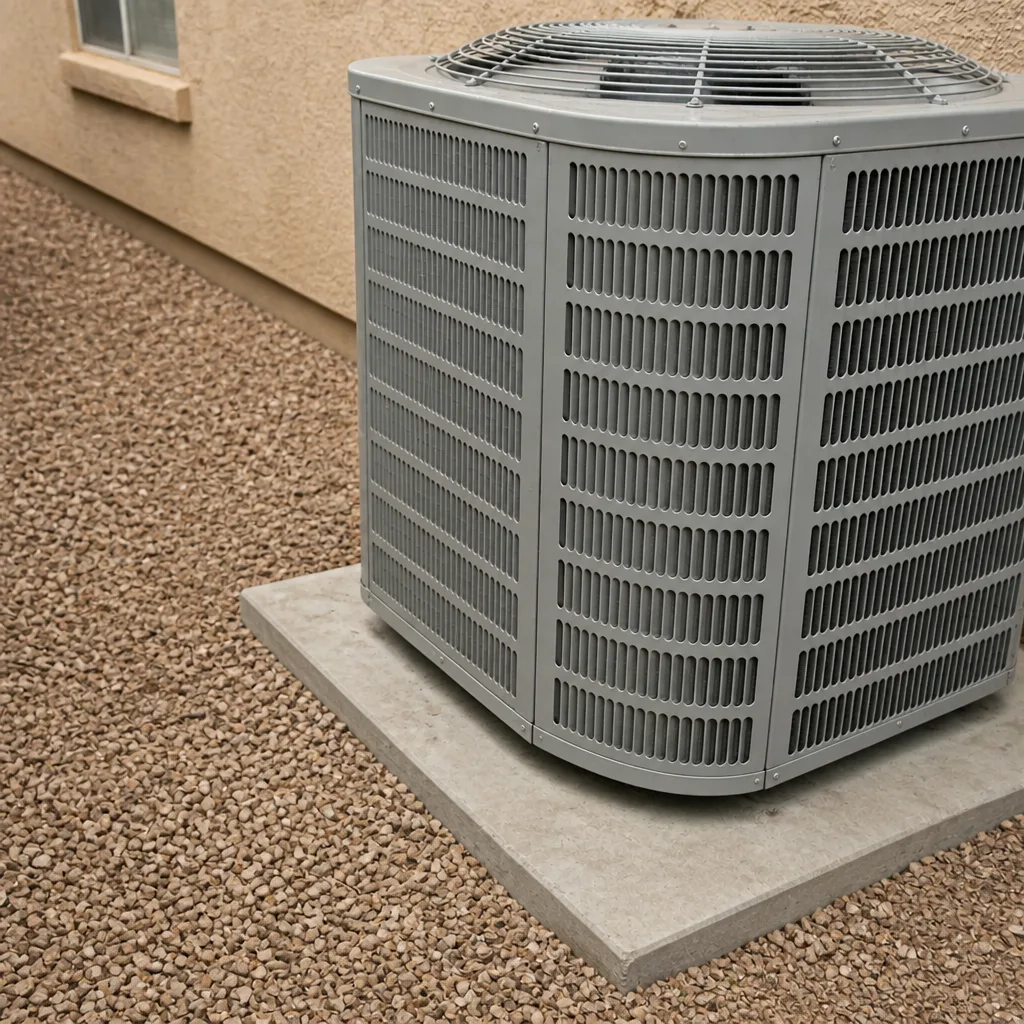
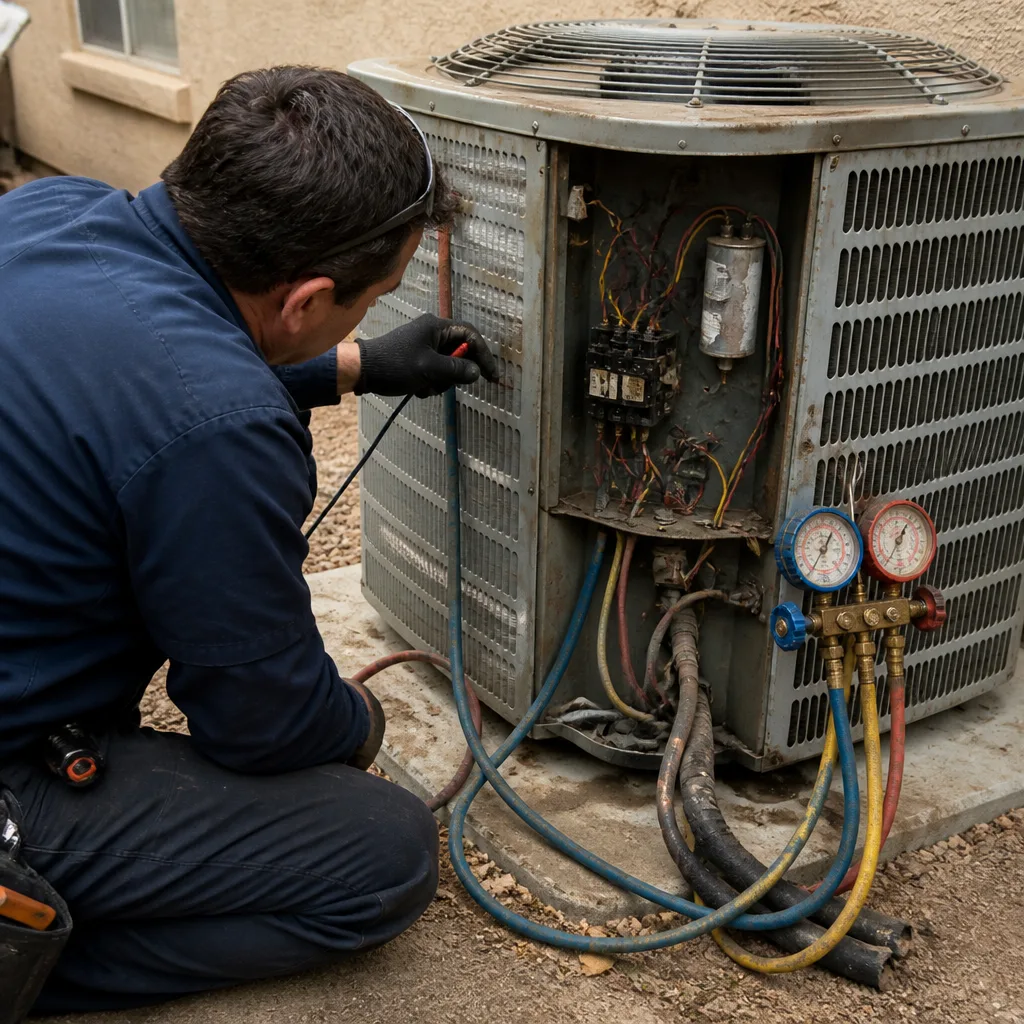 Before
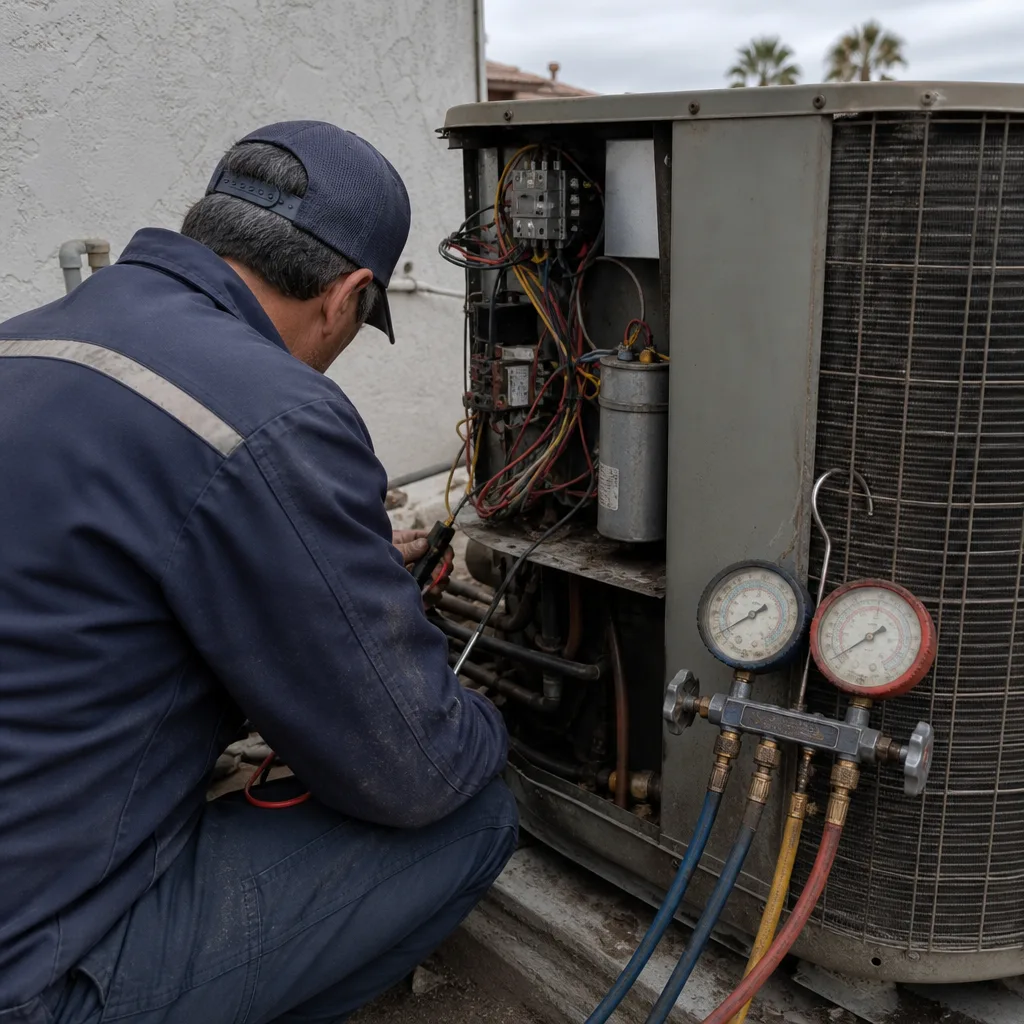
 After
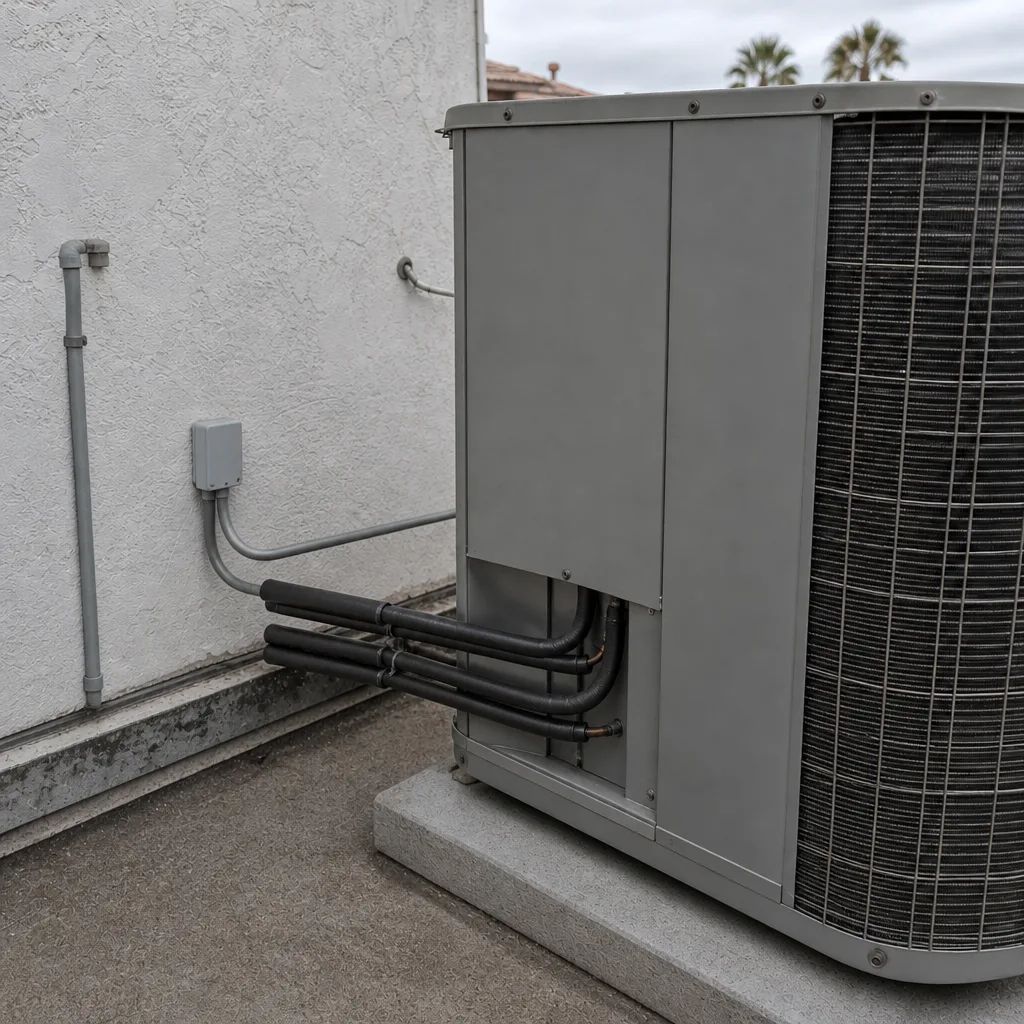
 Before
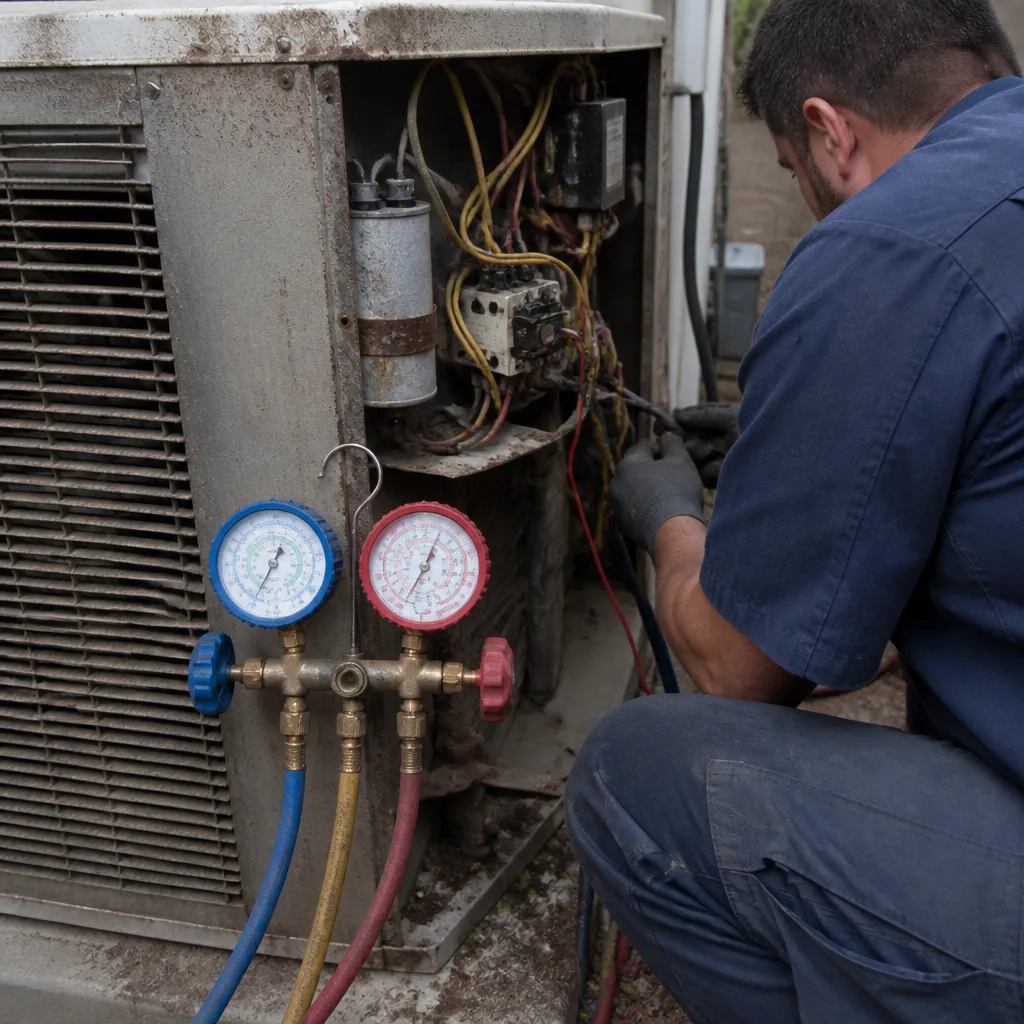
 After
 Before
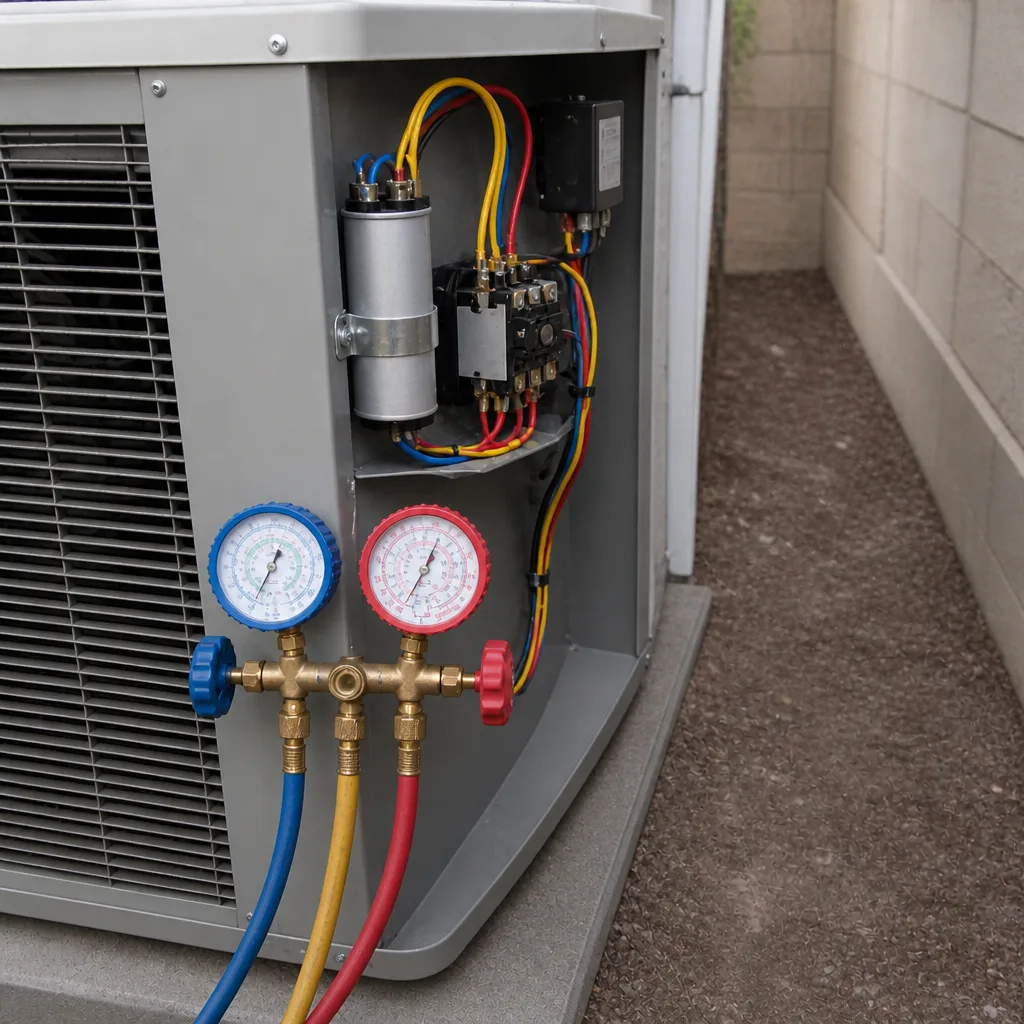 After
When to Call a Professional
Call a professional for any of these: the system is iced over and running but not cooling, the air handler is making grinding or hissing sounds, the breaker trips when the unit starts, you smell refrigerant, you hear a compressor that starts and immediately stops, or the cooling in any room has dropped noticeably compared to last summer. High-voltage refrigeration and compressor work isn’t a homeowner DIY job, and the diagnosis alone saves days of guesswork. Same goes for furnace work: a suspected heat exchanger crack or gas smell means shut the system off and call. AC Repair Paradise offers free estimates in Paradise for both repair and replacement, and our technicians have up to 9 years of experience across nine major manufacturers. Call (844) 820-2853. We answer 24/7. Fast dispatch from 7am to 7pm, Sunday through Friday.
Frequently Asked Questions
A standard central AC replacement in Paradise in 2026 typically runs $7,200 to $11,500 installed, including Clark County permits and disposal. A two-stage system lands around $9,500 to $13,500, a variable-speed system runs $12,000 to $18,000, and a heat pump replacement falls between $10,500 and $16,000 before NV Energy incentives. The written estimate for your specific home sets the final price. Call (844) 820-2853 for a free estimate.
A furnace-and-coil replacement in Paradise typically runs $5,800 to $9,200 installed, assuming the existing condenser is staying. If you’re replacing the whole system, budget for the combined number. Furnace replacement and repair both come through one visit with our team, so you don’t need a separate contractor for the heating side. Call (844) 820-2853 to schedule an assessment.
NV Energy has historically offered incentives for qualifying high-efficiency equipment, and that’s still true in 2026. The amounts vary by equipment tier and program cycle, so the correct figure is whatever NV Energy’s current program terms say. Confirm eligibility before signing, keep your permit paperwork, and submit promptly after installation. Call (844) 820-2853 and we’ll walk you through the paperwork.
Usually yes, when the fix is under $600 on a system under 8 years old and the rest of the equipment is healthy. Replacement starts to make sense when you have a major repair on a system over 12 years old, or when you’re facing a second significant fix in three years. An honest repair-or-replace assessment in the same visit is exactly what a AC installation conversation should start with, and our technicians will give you both options with numbers attached.
A heat pump is worth it in Paradise when you want one system that handles both cooling and heating without backup strip heat most of the year. Nevada’s climate is favorable to heat pumps because heating load is modest. With a qualifying incentive factored in, the total cost of ownership can be competitive with a gas furnace and AC combination. Call (844) 820-2853 and we’ll run the comparison for your home.
A standard residential replacement in Paradise typically takes one long day for the equipment, with a return visit for the final inspection and any duct or electrical work. Jobs with new line sets, panel upgrades, or duct replacement stretch to two or three days. We give you a firm install date on the estimate, not a window, so you can plan around the heat. Call (844) 820-2853 for a free quote.
The Bottom Line
National cost guides are a starting reference, not a plan for a Paradise home. The three things that actually move your number in 2026 are the equipment tier Nevada’s post-2023 code requires, the Clark County permit and inspection, and the labor realities of installing equipment in Paradise heat. Add current NV Energy incentives into the math and the picture gets clearer, but only if the quote you’re holding states every line item honestly. If it does, you’ll know what you’re paying for. If it doesn’t, ask. We work on nine brands across Paradise, including Daikin and Bryant, and brand-agnostic advice means the recommendation is for your house, not for the brands we stock. Call (844) 820-2853. We answer 24/7. Fast dispatch from 7am to 7pm, Sunday through Friday.
When you’re ready to look at Paradise HVAC options in detail, AC Repair Paradise handles installation, repair, and replacement for the full comfort lifecycle. We’re happy to put a written estimate in your hands with the line items visible and the permit and rebate paperwork accounted for.
Written by the team at AC Repair Paradise.