
Last updated November 16, 2026
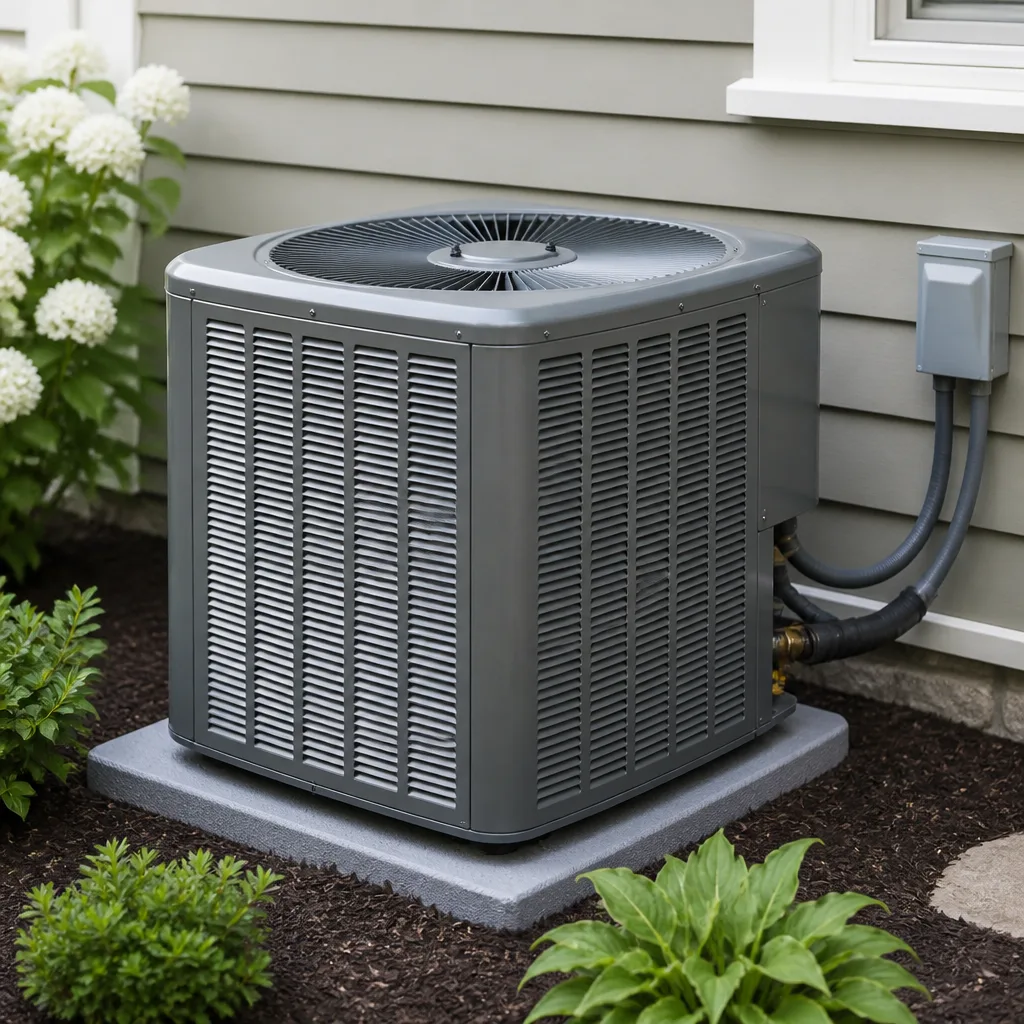 AC repair
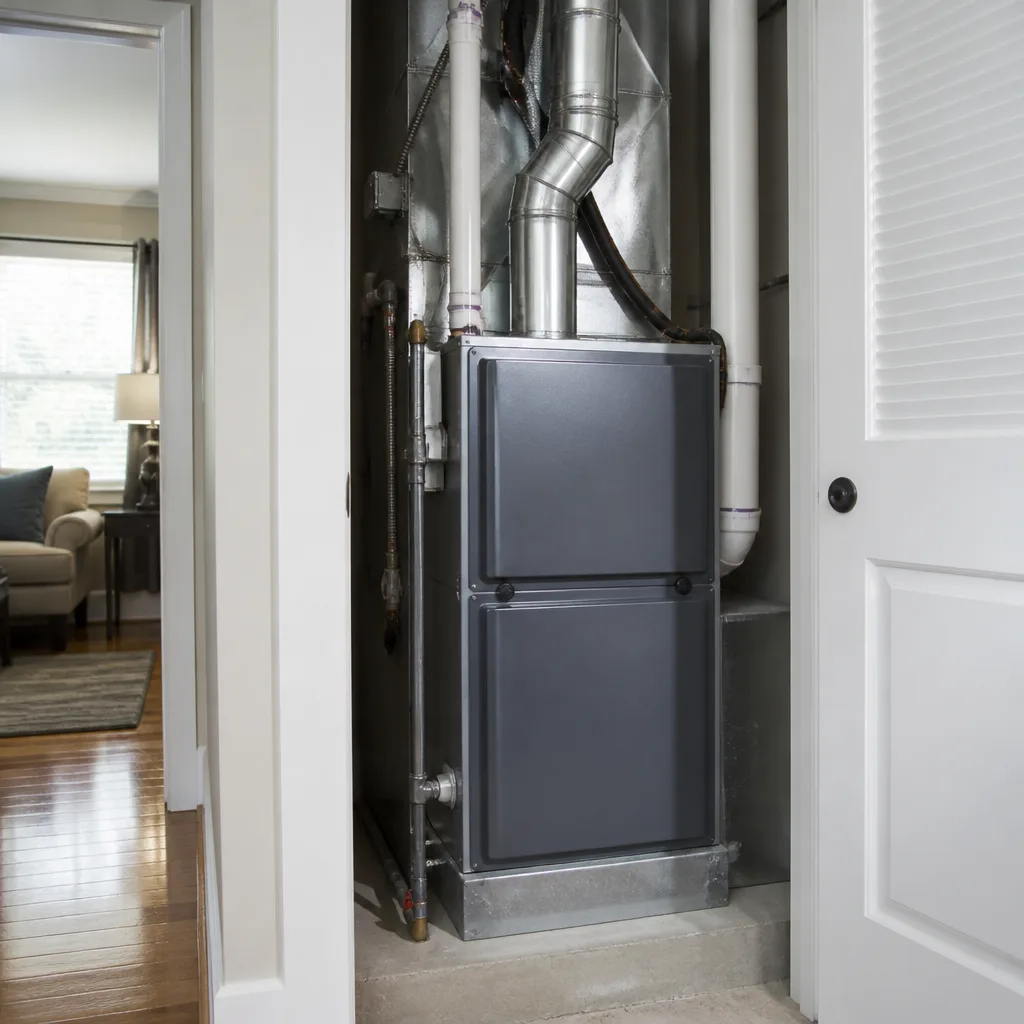 Furnace & heating
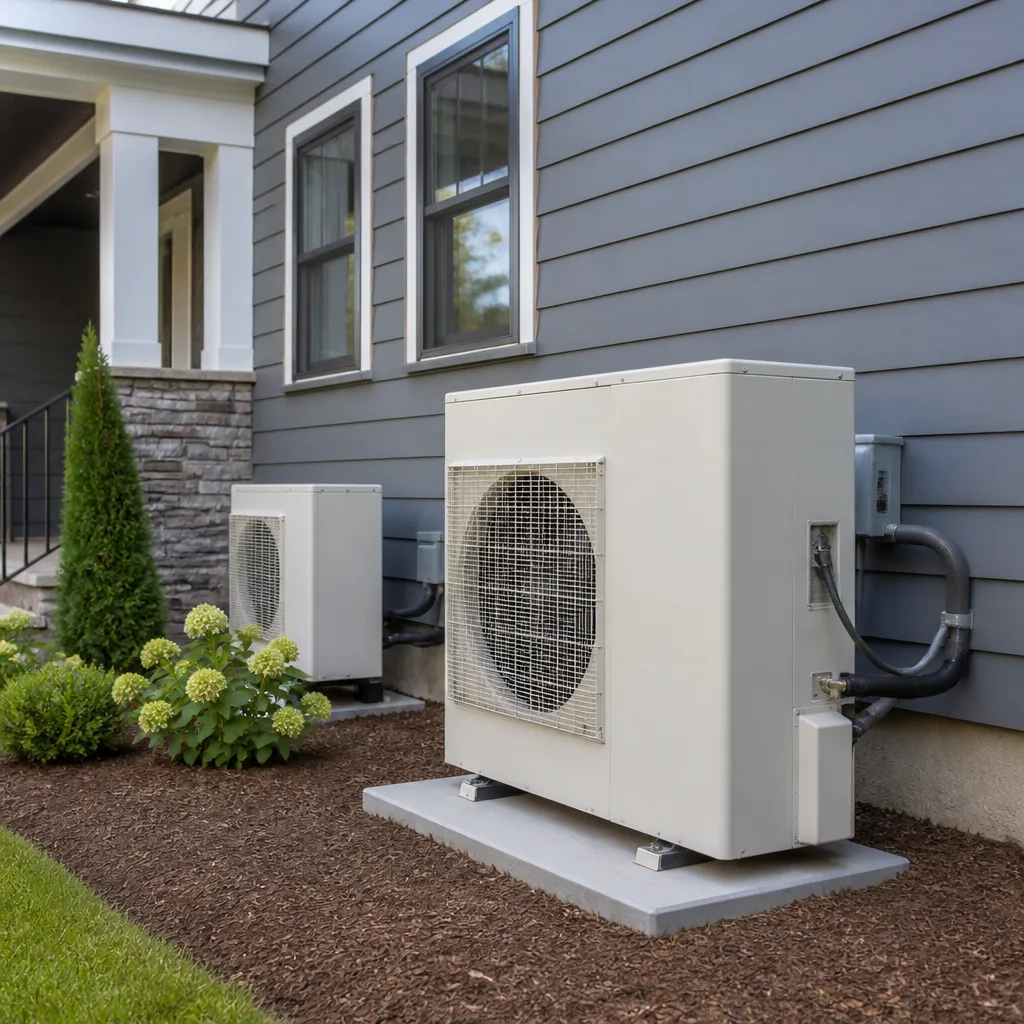 Heat pumps
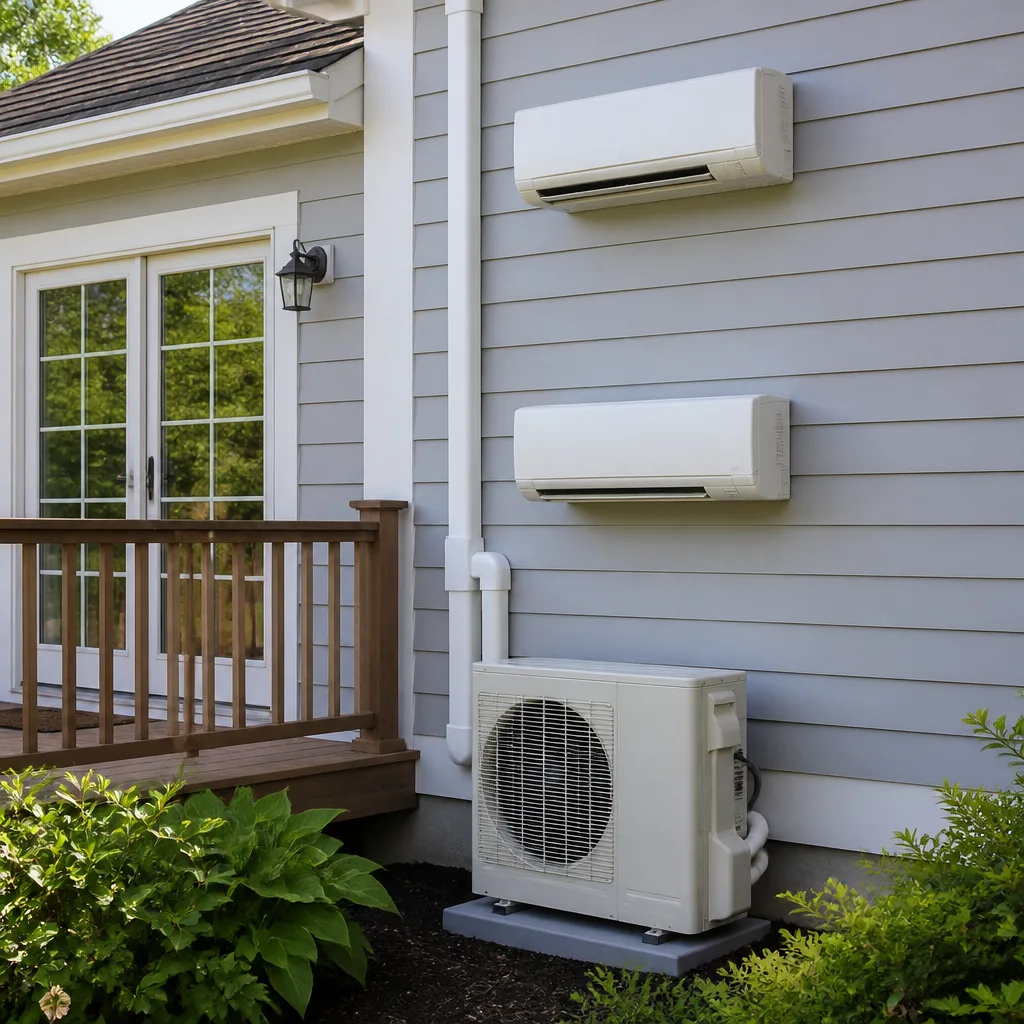 Ductless mini splits
 Carrier
 Trane
 Goodman
Seasonal tune-up and full diagnostic on your Carrier, Trane, or Goodman system - readings shown to you before any repair is proposed
Diagnosis first, numbers second - you approve the repair price before a single part goes in.
Get your free estimateThe Complete AC Installation Guide for Paradise Homeowners
Most AC installations in Paradise don’t fail the day the crew leaves. They fail two summers later, when a load calculation that ignored a west-facing block wall catches up with the equipment, or a refrigerant line set sized for a milder climate starts straining in July heat. The system runs. It just never runs well, and nobody can quite explain why the electric bill keeps climbing. This guide treats the desert as the primary design variable, not a footnote. You’ll learn how load calculations really work here, why attic temperatures above 150°F reshape duct decisions, how the Clark County permit sequence runs, and what it takes to capture NV Energy rebate money through proper documentation. If you’re planning an installation in Paradise, start here.
Quick Answer
A successful AC installation in Paradise comes down to correct sizing, not brand selection. A proper Manual J load calculation must account for radiant heat from stucco walls and unshaded west-facing exposures, not just square footage, and the equipment, ductwork and refrigerant line set all need to be matched to that load before a single box is opened. Get the calculation right and the rest of the job follows. Get it wrong and no brand on the market will save you.
Styles & brands we work with
- AC repair
- Furnace & heating
- Heat pumps
- Ductless mini splits
- Carrier
- Trane
- Goodman
Table of Contents
- Why Manual J Sizing Decides Everything in Paradise
- Attic Heat Above 150°F and What It Does to Your Duct Design
- Refrigerant Line Sets: Why Diameter Matters More in Extreme Heat
- The Clark County Permit and Inspection Sequence
- SEER2 Ratings and NV Energy Rebate Eligibility
- How to Choose Among Nine Major Brands Without Getting Sold
- Slab Construction and Single-Story Layout Considerations
- What a Typical Installation Timeline Looks Like
Why Manual J Sizing Decides Everything in Paradise
Sizing is the single decision that determines whether your system lasts fifteen years or five. Manual J is the industry-standard load calculation method, and in Paradise it has to be run with local design temperatures and real building details, not a rule of thumb like “one ton per 500 square feet.” That shortcut works in mild climates. In a desert with triple-digit summer highs, it produces equipment that either can’t keep up or cycles itself to death.
Here’s what a Paradise-specific Manual J has to include that a generic calculation misses:
- Radiant heat from stucco exterior walls. Stucco absorbs heat all afternoon and releases it into the wall assembly well after the sun drops. A wall facing west or southwest in Paradise can radiate heat into a room for hours into the evening, and the load calculation has to reflect that continuous gain, not just peak afternoon sun.
- Unshaded west-facing windows and walls. A west wall in full sun performs very differently than the same wall with a shade tree or an overhang. The calculation needs to know the difference, and that means someone has to look at the house.
- Window-to-wall ratio and glass type. Single-pane glass in an older Paradise home changes the sensible load substantially compared to dual-pane.
- Insulation levels in the walls and attic. Attic insulation is a major driver in desert climates, and it’s routinely under-measured.
- Infiltration. Desert homes are often tight, but drafty older construction leaks cooled air at a rate that has to be accounted for.
An undersized system runs continuously and never reaches setpoint, and a chronically overheated compressor fails early. An oversized system short-cycles: it cools the air fast, shuts off before it removes humidity, and then restarts. Short cycling kills compressors, wastes energy, and leaves the house feeling clammy even though the thermostat says 76°F. We work on York, Daikin, Bryant and American Standard equipment and the other major brands across this market, and the failure pattern is almost always the same regardless of label. The equipment wasn’t the problem. The sizing was.
Ask for the calculation in writing. A contractor who can’t produce a room-by-room load calculation is guessing, and in Paradise you can’t afford a guess.
Attic Heat Above 150°F and What It Does to Your Duct Design
Attic temperatures in Paradise routinely run above 150°F on summer afternoons. That number drives three separate decisions in an installation: where the air handler and ductwork go, what insulation they carry, and how much of your cooling dollar leaks away before the air reaches a register.
Ductwork in a 150°F attic loses a measurable share of its cooling to the surrounding air. If ducts are under-insulated or leaking, the system works harder to deliver the same comfort, and your electric bill pays for it. In our experience, duct design in Paradise has to assume the attic is a hostile environment on every summer day, not an occasional condition.
Duct Decisions That Matter
- Duct insulation R-value. Ducts in a desert attic need a higher insulation level than ducts in conditioned space or a temperate climate. Ask what R-value the ducts carry and verify it’s appropriate for attic installation in extreme heat.
- Duct location. Where possible, moving ductwork into conditioned space or a soffit reduces losses. Not every single-story slab home allows it, but it’s a design question worth raising.
- Sealing and testing. Every joint, boot, and connection should be sealed. Leaky ducts in a hot attic pull in attic air and push it through the house.
- Return air design. Undersized or restricted returns starve the system and raise static pressure, which shortens blower life and reduces delivered capacity.
- Air handler placement. An air handler in a 150°F attic faces a harder life than one in a closet or garage. Placement affects serviceability and equipment life.
If your existing ductwork is staying in place, ask for a duct inspection before the new unit goes in. Installing a new condenser on failing ductwork is money spent on the wrong end of the system. The duct design should be reviewed by someone who understands how the attic in Paradise behaves in August, because that’s the condition the system will spend its life in.
Refrigerant Line Sets: Why Diameter Matters More in Extreme Heat
The refrigerant line set is the pair of copper lines connecting the outdoor condenser to the indoor coil, and its diameter has to match the specific equipment being installed. This matters everywhere, but in extreme heat the margin for error shrinks. A line set sized for a mild climate can push system pressures into a range that shortens compressor life and degrades performance exactly when you need it most.
Every manufacturer publishes a line set specification for each model, and those specs aren’t interchangeable. A York condenser and a Daikin condenser of similar nominal capacity may call for different line sizes. Matching the line set to the unit’s published requirement is a manufacturer requirement, not a preference.
What to Verify on the Line Set
- Confirm the line set diameter matches the equipment manufacturer’s published specification for your specific model, not just the nominal tonnage.
- Confirm the line set length falls within the manufacturer’s allowable range, and that any required adjustments for length are made.
- Confirm the lines are properly insulated, especially the suction line, since exposed copper in a 150°F attic loses efficiency fast.
- Confirm the line set is routed and supported correctly, with no kinks and appropriate protection at wall penetrations.
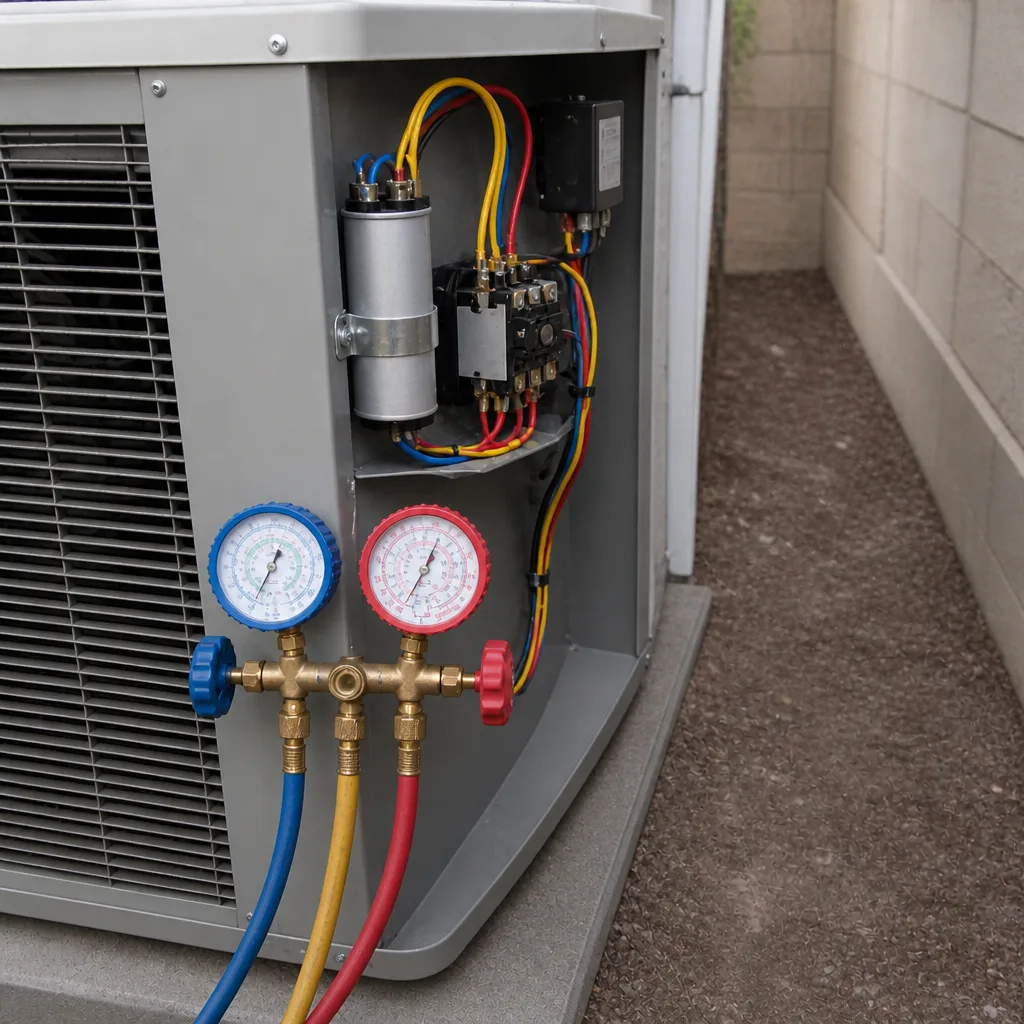
- Confirm the system is evacuated and charged to the manufacturer’s specified weight or subcooling target, not “to gauge pressure.”
When a contractor reuses an existing line set because it “looks fine,” ask whether the diameter matches the new equipment’s spec. In many cases it won’t, and the shortcut costs you compressor life over the following summers. If a line set replacement is needed, it should be part of the written estimate before the job begins, not a surprise afterward.
The Clark County Permit and Inspection Sequence
Residential AC replacement and installation in Paradise requires a permit through Clark County, and inspections follow a defined sequence. Skipping the permit doesn’t save money. It creates problems at resale, can void manufacturer warranties in some circumstances, and leaves you holding the liability if something goes wrong. Anyone quoting a job without mentioning a permit is telling you something about how they work.
The general sequence runs like this, though the exact steps depend on the scope of your job:
- Permit application. The contractor pulls the permit with the county before work begins, with the scope, equipment specifications, and load calculation as supporting documentation.
- Pre-inspection or rough-in inspection. Depending on scope, the county may inspect the rough installation before the system is closed up and charged.
- Final inspection. After installation is complete and the system is running, the county inspects the finished work for code compliance, equipment match, and proper documentation.
- Permit closeout. The permit is officially closed once inspections pass, and the closeout documentation should be kept with your home records.
What Fails Inspection Most Often
- Mismatched equipment. An outdoor condenser and indoor coil that aren’t a matched pair, which fails both code and manufacturer requirements.
- Missing or incomplete load calculation. The documentation isn’t there to support the equipment selection.
- Improper electrical connections. Undersized disconnects, wrong breaker sizing, or missing grounding.
- Incomplete refrigerant charge documentation. Verification of proper charge is required.
- Duct and plenum issues. Unsealed penetrations, improper support, or clearance violations.
- Condensate handling. Improper drain routing or missing secondary protection.
Ask for the permit number before the job starts and confirm the closeout after it finishes. A contractor who has run installations in Paradise knows the county’s expectations and builds them into the estimate. If you’re not sure what’s required, we can walk through it when you reach out for a AC installation estimate.
SEER2 Ratings and NV Energy Rebate Eligibility
SEER2 is the current efficiency standard for central air conditioning, and it replaced the older SEER rating. NV Energy rebate eligibility is tied to the efficiency tier of the equipment installed and to proper documentation of that installation. In practical terms, a higher-SEER2 system can qualify for more rebate money, but only when the paperwork is right. The rebate isn’t automatic, and it isn’t a marketing feature of the brand.
What Rebate Documentation Requires
- Equipment model numbers and SEER2 rating. The specific condenser and coil model numbers must show the system’s efficiency tier.
- AHRI certificate. A matched-system certificate showing the actual efficiency of the condenser and coil as installed together. A condenser rated at a high SEER2 alone doesn’t qualify if the coil doesn’t match.
- Permit closeout. Proof the installation was permitted and inspected as required.
- Installation invoice. Detailed invoice documenting the equipment, labor, and installation scope.
- Correct submission timing. Rebate applications generally need to be filed within a defined window after installation, so documentation has to be ready when the work is finished.
The most common rebate failure we see isn’t equipment. It’s paperwork. The system was installed correctly, but the AHRI certificate was never generated, or the invoice didn’t list the matched coil, or the submission window closed. Capturing this money is a matter of doing the documentation during the job rather than scrambling for it weeks later.
Ask specifically, before signing, who submits the rebate paperwork and how the AHRI certificate will be produced. The best answer is that the contractor produces it as part of the job and hands you a package ready to submit. We handle rebate documentation as part of the installation process so it doesn’t get lost between the install crew and whoever handles the paperwork at the office. Ask about current NV Energy eligibility and SEER2 tiers when you request your quote; the program details change, and we’ll confirm what applies to your system at the time of installation.
How to Choose Among Nine Major Brands Without Getting Sold
Brand selection is the most oversold decision in HVAC. At any given efficiency tier, the major manufacturers build equipment that performs comparably, and the difference between them almost always comes down to installation quality, contractor support, and parts availability. What isn’t equal is the recommendation you get from a contractor who only carries one brand.
We service equipment from Carrier, Trane, Lennox, Goodman, Rheem, York, Daikin, Bryant, and American Standard, and that’s precisely because brand-agnostic recommendations matter for a decision this expensive. A contractor whose supply house only stocks Bryant might steer you to Bryant regardless of what your home actually needs. That’s not malicious, but it’s a conflict of interest worth naming.
Questions to Ask About Brand Choice
- Which brands does your company actually service, not just install? Installation is one day. Service is the next fifteen years.
- Can you show me the AHRI certificate before recommending this system, so I can compare it against alternatives at the same SEER2 tier?
- What’s the local parts availability for this brand in this market?
- How does this system’s warranty work when it’s registered, and who registers it?
- If my unit fails next summer, is your company experienced servicing it?
Daikin and York have a strong presence in Southern Nevada residential work, and Carrier and American Standard systems are common across Paradise homes. Each brand has strengths, and none of them is the universal answer. If you’re facing a larger decision about the whole system including the heating side, our furnace repair and replacement coverage means you don’t have to bring in a separate contractor when the heating side needs attention.
Slab Construction and Single-Story Layout Considerations
Most Paradise homes are single-story slab construction, and that shapes installation in ways that matter for airflow, duct design and equipment placement. A slab home doesn’t have a basement or crawl space, so ductwork typically runs through the attic or exposed soffits. That means every duct decision is a hot-attic decision.
How Single-Story Slab Construction Changes the Job
- Attic-based ducts. With no basement, ducts go into the attic where summer temperatures exceed 150°F, making insulation and sealing critical.
- Equipment location. The condenser has to sit on a pad with appropriate clearance, often in a side yard with limited airflow access. Placement matters for performance and serviceability.
- Return air paths. Older slab homes often have restricted return air paths. A new system won’t reach its rated capacity if the return can’t feed it.
- Register placement. Ceiling registers in a room with a west-facing wall need to be positioned so the air actually reaches the hot side of the room, not just the center.
- Structural penetrations. Any ductwork or line set penetration through slab walls or roof assemblies needs to be properly sealed to prevent interior humidity issues and energy loss.
Single-story homes in Paradise neighborhoods like those around the Strip corridor and the residential pockets north and south of the airport don’t have basements or easy attic access in some cases, and the duct design has to work with what’s actually there. Ask your contractor to walk the attic before submitting the bid, not after. And if the layout raises a question about whether a repair or a full replacement is the right move on the heating side, our Paradise service coverage is a useful place to start a conversation.
What a Typical Installation Timeline Looks Like
A full AC installation in Paradise usually spans multiple stages. Replacement and repair are different jobs, and both require a technician who has worked with the equipment before starting the write-up. Here’s how the general sequence runs.
Pre-Installation
- Request a free estimate. The contractor visits the home and evaluates the existing system, ductwork, electrical, and available space.
- Run the load calculation. Manual J sizing using actual wall, window, insulation, and attic details, not square footage alone.
- Propose options. Written estimates across a few efficiency tiers with model numbers and AHRI certificates for each.
- Pull the permit. The contractor files with Clark County with the scope and documentation.
- Order equipment. The correct system, coil, line set, and any accessories are ordered and staged.
- Schedule install date. A specific installation date is set, with time allowed for both equipment staging and crew.
Installation Day
- Protect the home. Floors, work areas, and routes are covered and protected.
- Recover refrigerant. Existing refrigerant is recovered properly; equipment is removed and hauled away.
- Set the new equipment. Condenser, coil, and any duct modifications are installed per the load calculation.
- Install or verify line set and electrical. Diameter matched to spec, electrical connections per code.
- Evacuate and charge. System evacuated and charged to manufacturer specification.
- Commission and test. System started and verified against design conditions, airflow balanced.
Post-Installation
- County inspection. Final inspection and permit closeout.
- AHRI certificate and rebate paperwork. Documentation assembled and handed off ready for submission.
- Warranty registration. Equipment registered with the manufacturer to preserve warranty coverage.
- Owner walkthrough. You get a walkthrough of the system and its controls.
The full sequence from estimate to closeout typically spans several weeks because equipment procurement and permit scheduling take time. If your current system is failing, call (844) 820-2853. We answer 24/7. A call outside dispatch hours is booked into the next opening, Sunday through Friday, 7am to 7pm. We can stage the work so you’re not left without cooling longer than necessary.
Common Mistakes to Avoid
- Accepting a square-footage-only quote. “Three tons for 1,800 square feet” is a guess, and in Paradise it’s often the wrong guess because radiant gain from west-facing stucco walls isn’t in the math.
- Reusing the existing line set without checking diameter. The old line set may not match the new equipment’s published specification, and in extreme heat the mismatch shortens compressor life.
- Skipping the permit. A permit isn’t a formality in Clark County. It protects your resale, your warranty, and your liability, and skipping it can fail a future inspection.
- Choosing a contractor by brand alone. A contractor who only carries one brand will recommend that brand. Ask what other brands they service and whether they’ll show you the AHRI certificate for each option.
- Leaving the ducts out of the bid. Installing new equipment on leaking or undersized ductwork delivers a fraction of the comfort you paid for. Duct inspection belongs in the same visit as the estimate.
- Forgetting the rebate paperwork. NV Energy rebate eligibility depends on SEER2 tier and documentation. If the AHRI certificate isn’t produced during the job, the money may be lost.
- Not verifying the load calculation in writing. A written Manual J is a deliverable, not a secret contractor step. Asking for it is not unreasonable.
- Ignoring attic temperatures when placing equipment. An air handler in a 150°F attic needs proper clearance, insulation, and serviceability. Placement isn’t cosmetic.
See the difference
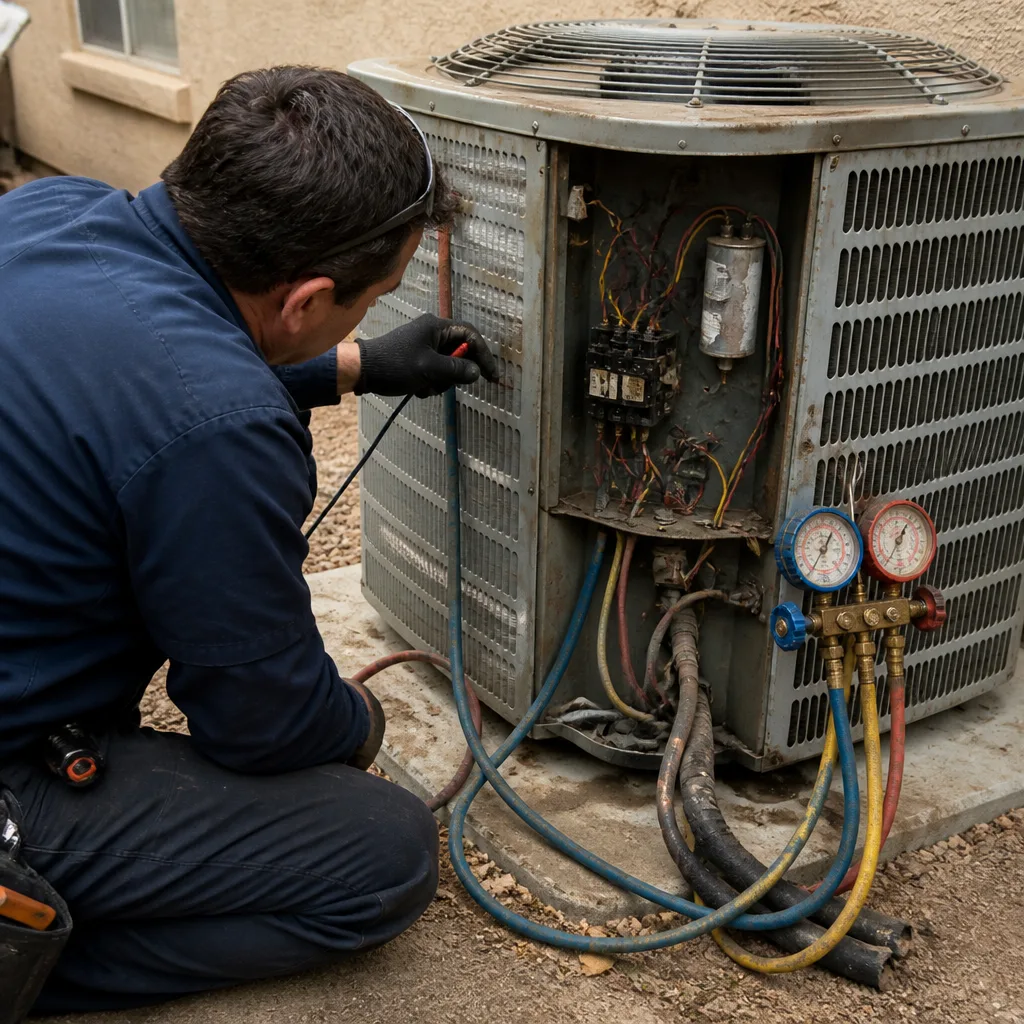 Before
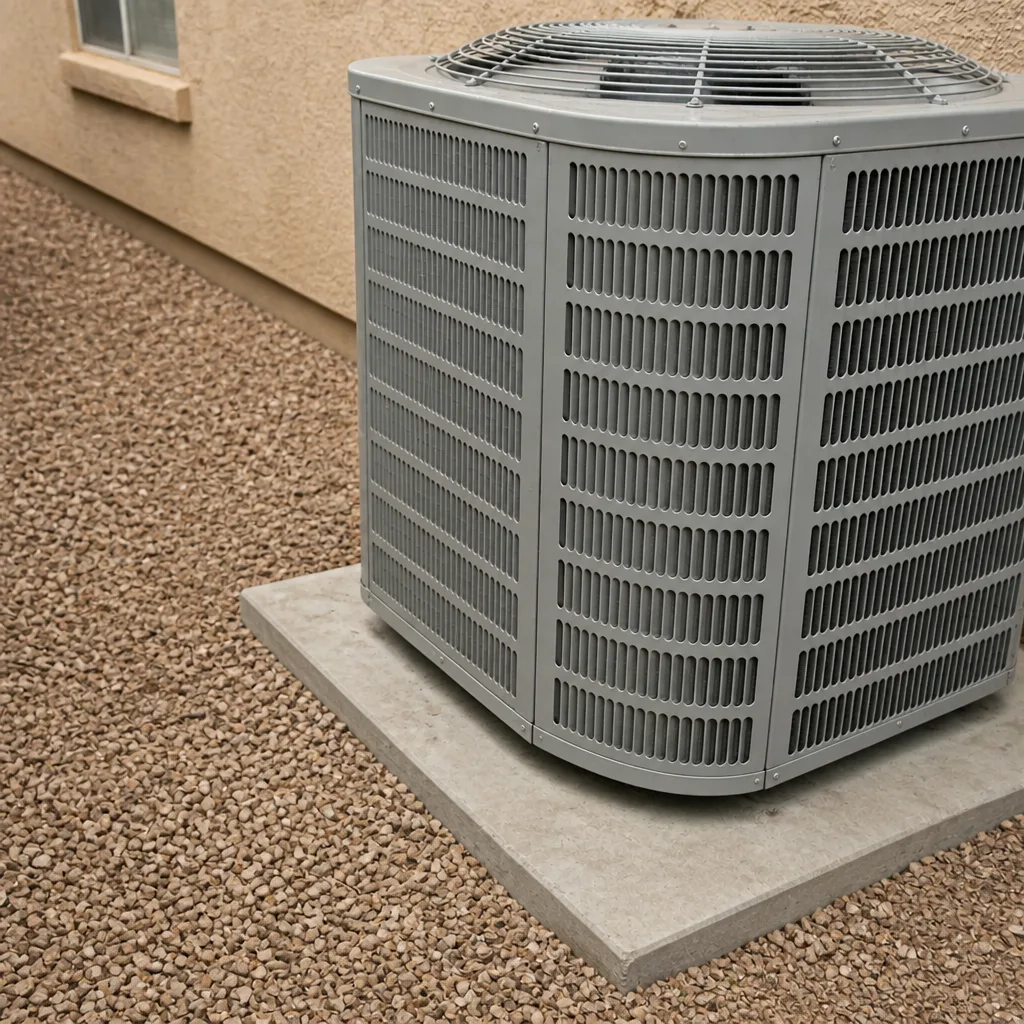 After
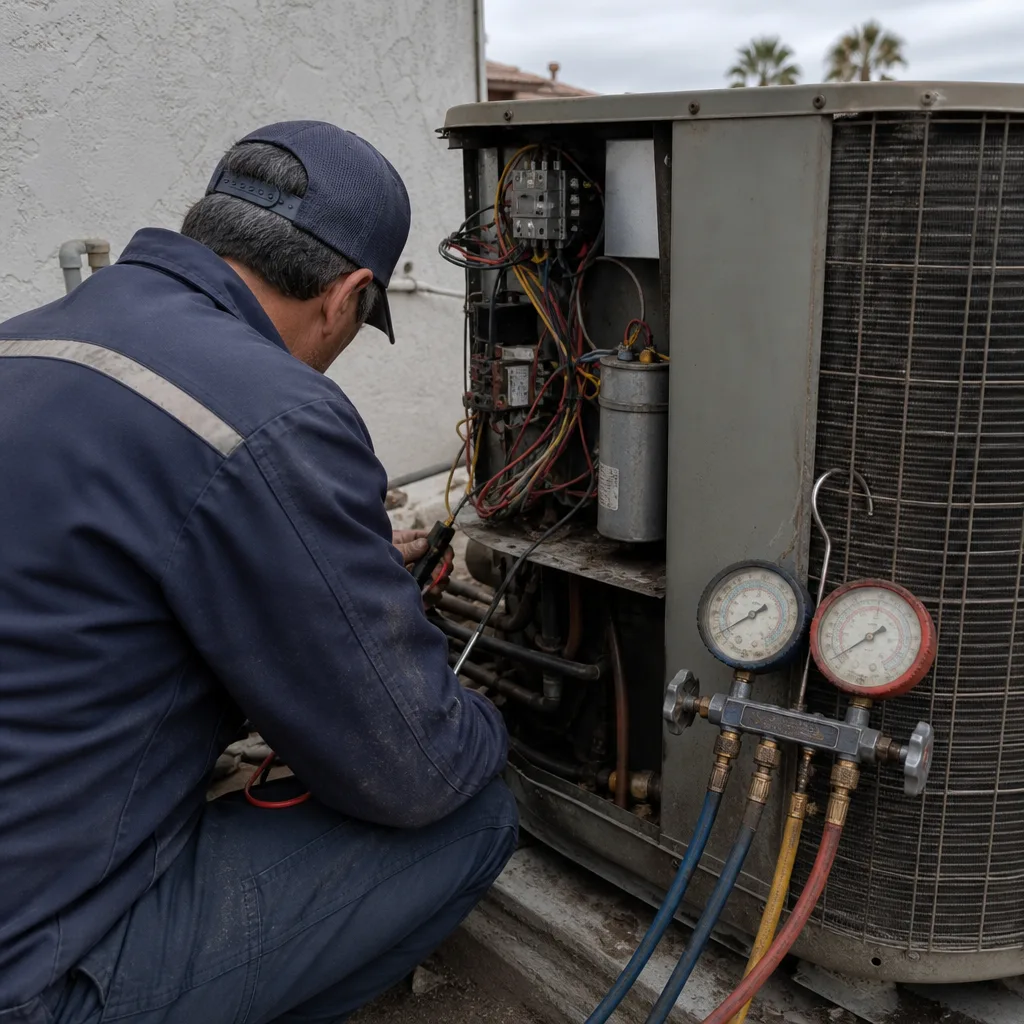 Before
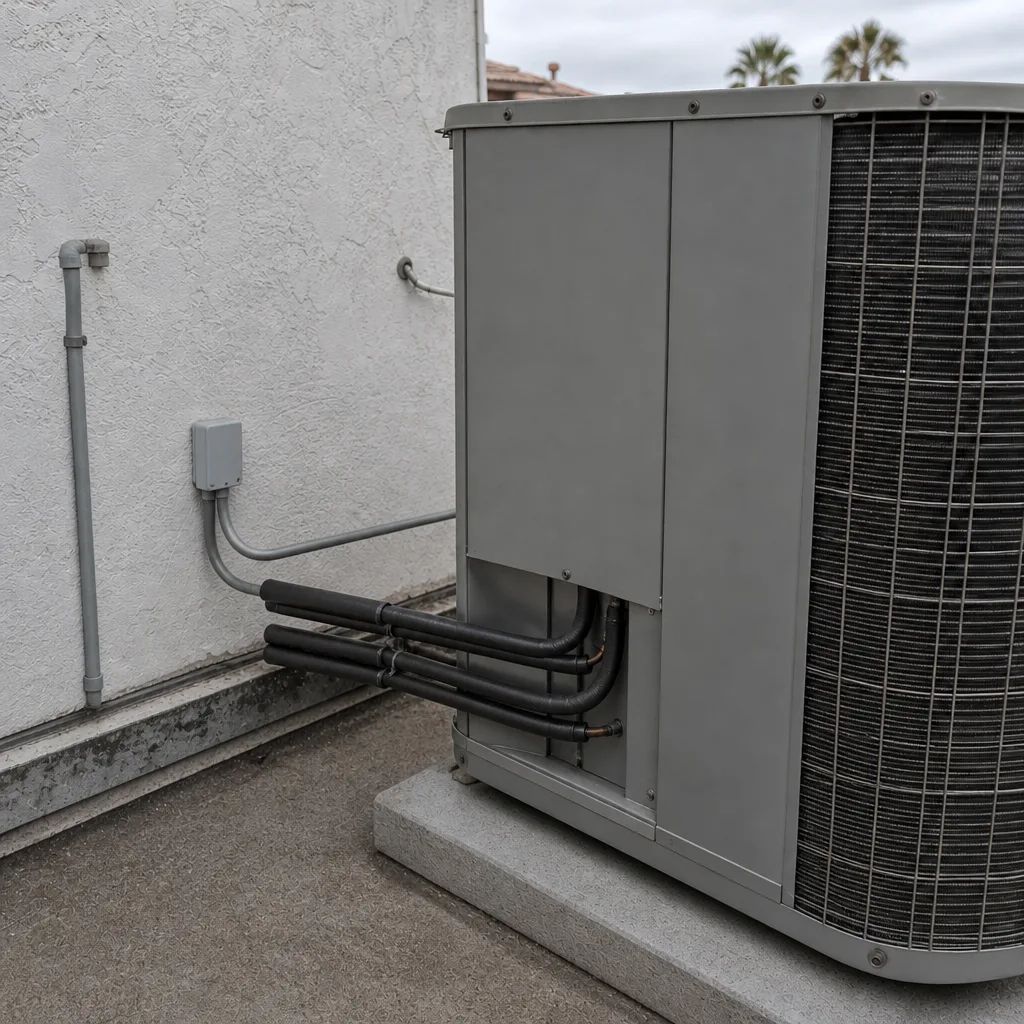 After
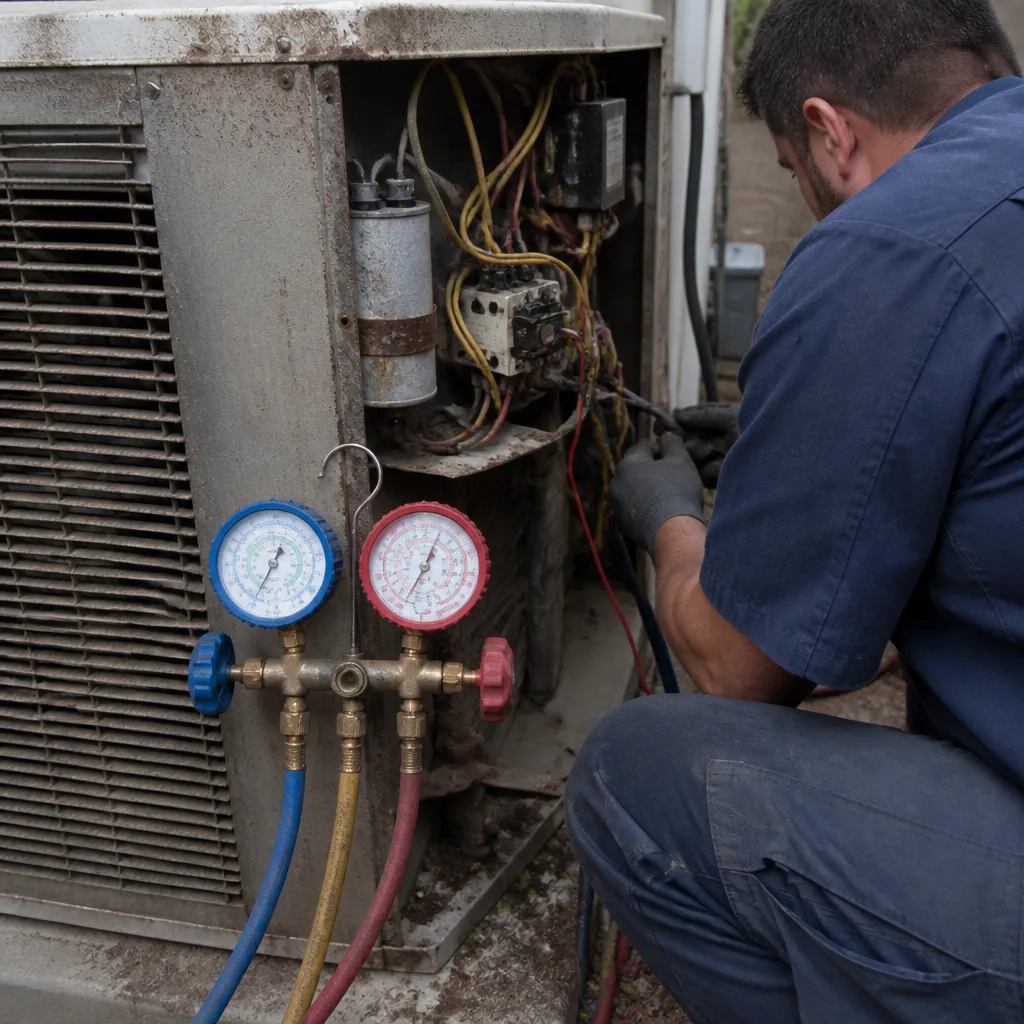 Before
 After
When to Call a Professional
AC installation in Paradise isn’t a homeowner project. Refrigerant handling requires EPA certification, electrical work requires licensed trades, and the permit and inspection sequence runs through Clark County. Beyond compliance, the load calculation and duct design decisions that determine how your system performs for the next fifteen years aren’t something you want to get wrong the first time.
Call us if you’re facing any of these situations: your current system is undersized or oversized and always runs or never quite cools; your electric bill climbed through the summer with no explanation; you’ve been quoted a system with no load calculation and no AHRI certificate; you’re replacing the heating side and don’t want to coordinate a second contractor; or your contractor’s permit paperwork is vague. We work with homeowners across Paradise and the broader valley, and our technicians have up to 9 years of experience with nine major brands, from York and Daikin to Bryant and American Standard.
AC Repair Paradise offers free estimates in Paradise. Call (844) 820-2853. We answer 24/7, with fast dispatch from 7am to 7pm, Sunday through Friday. Same-day service is available for repair and diagnostic work, and we’ll give you a straight answer on repair versus replacement rather than pushing a new system you don’t need.
Frequently Asked Questions
Every installation is different, and we don’t quote a number without seeing the home. The written estimate sets the price, and that estimate depends on the system size, efficiency tier, line set, ductwork condition, and any electrical upgrades. Free estimates are the first step, and they include the load calculation. Call (844) 820-2853 for an exact quote. Estimates are free.
Yes. Residential AC replacement in Paradise requires a permit through Clark County. The contractor pulls the permit before work begins and closes it out after inspection. If your contractor doesn’t mention the permit, ask before signing. Skipping it creates issues at resale and can complicate warranty coverage. We handle the permit as part of the job, so call (844) 820-2853 if you’re not sure how yours is being handled.
The installation itself for a typical residential replacement takes a day, but the full process from estimate to closeout spans several weeks because equipment procurement, permit scheduling, and inspection add time. If your system has failed, we can stage the work to keep you cooling sooner. Call (844) 820-2853 to talk through timing for your home.
NV Energy rebate eligibility is tied to the efficiency tier of the installed system and to proper documentation of that installation. The specific SEER2 threshold can change as program requirements change, so confirm eligibility with us at the time of installation. What we can tell you is that documentation matters as much as the equipment: AHRI certificate, permit closeout, and a detailed invoice all need to be produced as part of the job. Call (844) 820-2853 to ask what tier currently applies.
It depends on the age of the system, the condition of the compressor and coil, and whether the current system was ever properly sized for the home. A unit that was undersized from day one won’t be fixed by a repair, and a system that’s failing repeatedly in extreme heat is usually beyond repair. We’ll look at both options honestly rather than pushing a replacement. Call (844) 820-2853 for a free estimate.
No, and that’s true for every licensed contractor in Paradise worth calling. Installation requires a load calculation, equipment ordering, and a permit through Clark County, so it’s scheduled rather than same-day. Same-day service covers repair and diagnostic work. For installation, call (844) 820-2853 to get on the estimate schedule and we’ll give you a written fixed price and a set install date.
The Bottom Line
A successful AC installation in Paradise isn’t won by brand choice or by the fastest bid. It’s won by the load calculation that reflects real radiant heat from unshaded west-facing walls and stucco exteriors, by duct and line set decisions that hold up in a 150°F attic, by a clean Clark County permit and inspection sequence, and by rebate documentation done during the job instead of after it. Every one of those steps is within your control as a homeowner. Ask for the load calculation, ask for the AHRI certificate, ask who pulls the permit, and ask who submits the rebate paperwork. A contractor who’s comfortable with those questions is a contractor you can trust with this decision. Call AC Repair Paradise at (844) 820-2853 for a free estimate and a straight conversation about what your home actually needs. We answer 24/7. Fast dispatch, 7am-7pm, Sunday through Friday.
Written by the team at AC Repair Paradise.